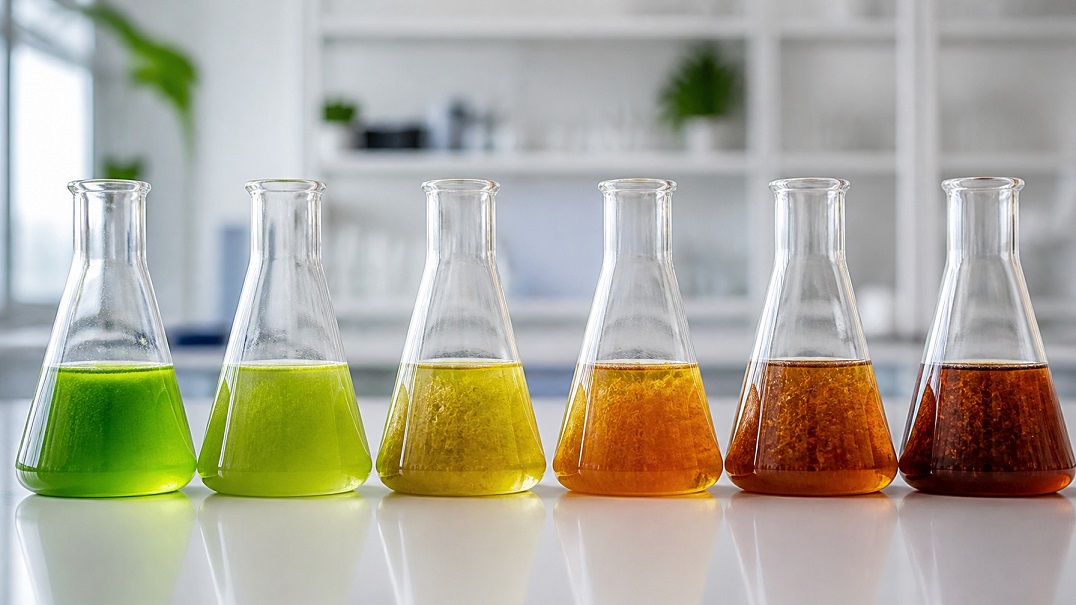
“Algae” gets treated like a single ingredient, the way “fish” gets treated like a single ingredient even though a sardine and a swordfish have almost nothing in common. In reality, the word covers an enormous range of organisms, from freshwater green cells to saltwater cyanobacteria to marine microorganisms that never see sunlight at all. Some are grown for protein. Some are grown for pigment. Only a couple are grown specifically because they happen to be exceptional at producing DHA and EPA, the omega-3 fatty acids most people are actually after.
If you’ve ever wondered why your green smoothie powder and your omega-3 softgel are both technically “algae” but seem to have nothing else in common, this is why. Here’s a field guide to the species that actually show up in bottles, jars, and supplement labels, and what each one is really good at.
Spirulina: The High-Protein Cyanobacteria
Spirulina isn’t technically a plant or a true alga in the strictest biological sense. It’s a cyanobacteria, sometimes still called “blue-green algae” out of old habit, that grows in warm, alkaline lakes and ponds. Its scientific name is usually given as Arthrospira platensis, and it’s been part of the human diet for a very long time. The Aztecs reportedly harvested it from Lake Texcoco and pressed it into cakes centuries before anyone called it a superfood.
What Spirulina Is Actually Good At
Spirulina’s claim to fame is protein, not omega-3. It’s unusually protein-dense for a microorganism, and it contains gamma-linolenic acid (GLA), an omega-6 fatty acid with its own set of anti-inflammatory properties. Its DHA and EPA content, however, is minimal. If you see spirulina marketed heavily for omega-3 benefits, that’s more marketing enthusiasm than biochemistry. Its real strengths lie elsewhere, in protein content, antioxidants like phycocyanin, and a striking blue-green color that makes it a favorite in smoothie bowls and green powders.
Chlorella: The Freshwater Detox Favorite
Chlorella is a genuine single-celled green alga, distinct from spirulina’s cyanobacteria classification, and it grows in freshwater. It’s best known in wellness circles for chlorophyll content and a reputation, debated among researchers, for helping bind and remove heavy metals from the body.
Where Chlorella Fits Into the Omega-3 Picture
Chlorella does contain more omega-3 fatty acids than spirulina, which surprises people who assume all algae are roughly interchangeable. Even so, its DHA and EPA levels are relatively low compared to the algae species that supplement makers actually cultivate for omega-3 extraction. Chlorella is a nutritional multitasker, rich in vitamin B12, iron, and antioxidants, but it isn’t the organism doing the heavy lifting in your omega-3 softgel.

Schizochytrium: The DHA Powerhouse Behind Most Supplements
This is the species most algae-based omega-3 supplements are actually built on, even though almost nobody outside the supplement industry has heard of it. Schizochytrium is a marine microorganism, technically a type of thraustochytrid rather than a classic alga, that produces DHA in impressively high concentrations. It doesn’t photosynthesize the way spirulina and chlorella do. Instead, it’s grown in dark fermentation tanks and fed a controlled diet of sugars, which lets manufacturers produce large, consistent batches of oil without relying on sunlight, seasons, or open water at all.
Why Manufacturers Prefer It
Schizochytrium is efficient, scalable, and produces DHA at levels that make commercial extraction practical. It’s the closest thing the algae world has to a workhorse crop, chosen specifically because it does one job extremely well rather than offering a broad nutritional profile.
Crypthecodinium Cohnii: The Original Space Algae
This species has a stranger backstory than most ingredients get. Crypthecodinium cohnii is the marine microalgae strain that NASA-funded researchers originally identified while studying algae for long-duration space missions in the 1980s, work that eventually led to the first algae-derived DHA added to infant formula. It remains in use today, particularly in some infant nutrition products, though Schizochytrium has become more common in adult omega-3 supplements because of its higher yield.
Nori, Kelp, and the Seaweeds That Aren’t the Same Thing at All
Here’s where a lot of confusion creeps in. Nori, kelp, dulse, and other seaweeds are macroalgae, meaning they’re large, visible, multicellular organisms you can actually see and hold, unlike the microscopic species above. They’re nutritionally valuable in their own right, particularly for iodine and certain minerals, but they are a completely different category from the microalgae used in omega-3 supplements. A sheet of nori wrapped around a piece of sushi and a softgel of algae oil both technically come from “algae,” but they’re about as related as a mushroom is to a redwood tree. Both are technically fungi and plants respectively in the broadest sense, but nobody would call them interchangeable.
A Quick Comparison at a Glance
Here’s how the main players stack up against each other, since it’s easy to lose track of which organism does what once the names start blending together.
| Species | Type of Organism | Habitat | Primary Claim to Fame | Relevance to Omega-3 Supplements |
|---|---|---|---|---|
| Spirulina (Arthrospira platensis) | Cyanobacteria | Warm, alkaline lakes | Protein and antioxidants | Minimal DHA/EPA content |
| Chlorella | Green microalga | Freshwater | Chlorophyll, B12, detox support | Some omega-3, not a primary source |
| Schizochytrium | Marine thraustochytrid | Grown in fermentation tanks | High-yield DHA production | The main species behind most commercial algae DHA |
| Crypthecodinium cohnii | Marine microalga | Ocean, cultivated in tanks | First algae strain commercialized for DHA | Still used, mainly in infant nutrition products |
| Nori, kelp, dulse | Macroalgae (seaweed) | Coastal ocean waters | Iodine and minerals | Not a meaningful DHA/EPA source |
Why This Distinction Actually Matters
If a label says “algae” without specifying a species, it’s worth asking which one, the same way you’d want to know whether a “fish oil” supplement came from salmon or from unnamed “assorted fish” byproducts. Omega-3 supplements that are genuinely built for DHA and EPA content generally rely on Schizochytrium or Crypthecodinium cohnii, not spirulina or chlorella, no matter how prominently the word “algae” appears on the front of the bottle.

Frequently Asked Questions
Is spirulina a good source of omega-3?
Not really. Spirulina is valued mainly for its protein content and gamma-linolenic acid, an omega-6 fatty acid. Its DHA and EPA levels are minimal compared to algae species that are specifically cultivated for omega-3 production, such as Schizochytrium.
Which algae species is used in most omega-3 supplements?
Schizochytrium is the species most commonly used in commercial algae-based omega-3 supplements because it produces DHA at high, consistent concentrations when grown in controlled fermentation tanks.
Is chlorella the same as the algae in omega-3 supplements?
No. Chlorella is a freshwater green alga known mainly for chlorophyll and detox-related claims. While it contains some omega-3 fatty acids, it isn’t the species primarily used to produce commercial algae-based DHA and EPA.
Are seaweed and the algae used in supplements the same thing?
No. Seaweeds like nori and kelp are macroalgae, large multicellular organisms valued mainly for iodine and minerals. Omega-3 supplements are made from microalgae, single-celled organisms like Schizochytrium and Crypthecodinium cohnii, which are biologically very different from seaweed despite the shared term “algae.”


