Algae as a health food can feel like a fairly recent idea, something that showed up alongside kale chips and green smoothies. In reality, several cultures around the world have been eating algae directly, as a staple food rather than a trend, for centuries. Some of these traditions predate the word “superfood” by close to a thousand years. None of them involved a softgel or a supplement label. They involved rocky coastlines, alkaline lakes, and generations of people who simply figured out that a strange green or purple substance growing in the water happened to be worth eating.
Here’s a tour of a few of those traditions, and what they can tell us about a food category we now mostly encounter in capsule form.
Wales and the Story Behind Welshman’s Caviar
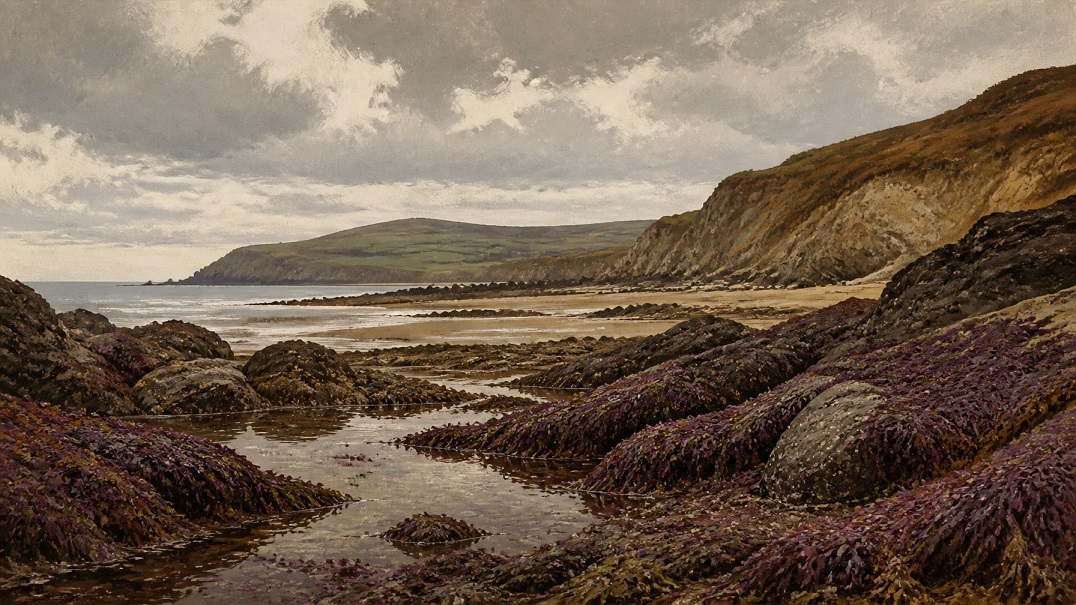
Along the rocky shorelines of Pembrokeshire and the Gower Peninsula, people have been harvesting a thin, purplish seaweed called laver for centuries, with written references to the practice going back to at least the early 1600s. The seaweed is washed, boiled for hours until it breaks down into a dark, glossy paste, and traditionally mixed with oatmeal and fried, often served alongside bacon or cockles as part of a Welsh breakfast.
The dish, known as laverbread or bara lawr in Welsh, earned itself an affectionate nickname somewhere along the way: Welshman’s caviar. It was originally a food born of necessity along a coastline where other resources could be scarce, but it stuck around long after necessity stopped being the reason. Laverbread was awarded Protected Designation of Origin status in 2017, putting it in the same regulatory category as Champagne and Parmesan cheese, official recognition that it’s a food tied inseparably to a specific place.
The Same Seaweed, an Ocean Away
Here’s the twist. The exact species of seaweed used for Welsh laverbread, Porphyra umbilicalis, is closely related to the seaweed used to make Japanese nori. Two cultures on opposite sides of the world, with no historical contact on the subject, both independently decided the same reddish seaweed was worth eating. One turned it into a fried breakfast dish. The other turned it into the wrapper for sushi.
Japan’s Nori Industry and the Scientist Who Saved It
Nori has been harvested in Japan since at least the 17th century, but for most of that history, the harvest was wildly unreliable. Farmers had no idea how the seaweed actually reproduced, so they could only guess at where and when it would grow, a problem so persistent that nori earned the nickname “gambler’s grass.” By the years following World War II, pollution and a string of typhoons had pushed the wild nori harvest to the brink of collapse.
The solution came from an unlikely source: a British phycologist named Kathleen Drew-Baker, who had never set foot in Japan and studied a completely different population of the same seaweed species growing along the Welsh coast. Working in an unfunded home laboratory after being dismissed from her university teaching post for getting married, she figured out the previously unknown reproductive life cycle of the seaweed. When Japanese researchers applied her findings, they were able to seed and cultivate nori reliably for the first time, turning a struggling wild harvest into a modern industry that now produces hundreds of thousands of tons a year. Drew-Baker died in 1957 without knowing the impact her research would have. In Japan, she’s still honored every April 14th at a shrine overlooking the nori fields, where she’s known as Haha-no-umi, the Mother of the Sea.
Ireland’s Sleabhac and a Long Coastal Tradition
Just across the water from Wales, Irish coastal communities developed their own version of the same idea. Seaweed, including dulse and the same laver-type species used in Wales, has long been part of traditional Irish coastal diets, known locally by names like sleabhac. It might be cooked with a bit of bacon, fried with garlic butter, or crumbled dried over eggs and vegetables. Like the Welsh tradition, it developed in places where the sea was close and other food sources weren’t always dependable, and it stuck around as a genuine regional food long after it stopped being a necessity.
The Kanembu People of Chad and a Thousand Years of Dihé
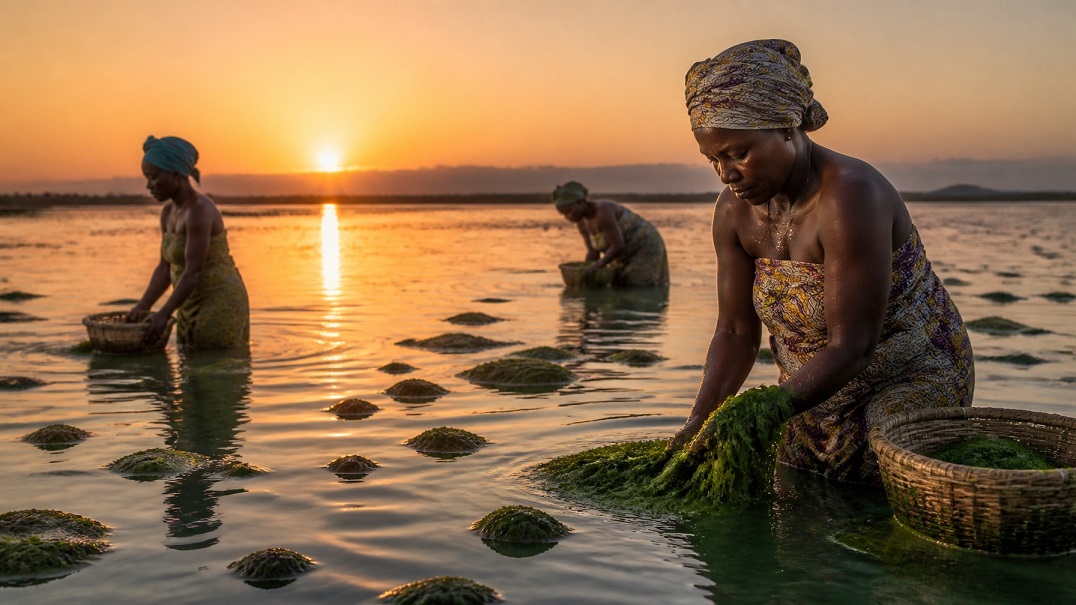
Perhaps the most striking example comes from Lake Chad in central Africa, where the Kanembu people have harvested spirulina from the lake’s alkaline waters for what may be over a thousand years, with roots tracing back to the era of the Kanem Empire in the 9th century. The tradition is carried out almost entirely by women. Harvesting begins in the morning under the supervision of an older woman who oversees the lake, and the algae is skimmed from the surface, drained, pressed into cakes, and left to dry in the sun. The finished product is known locally as dihé.
Dihé is typically crushed and used to make a sauce, often combined with beans, meat, or fish, or simply mixed into rice or milk. It’s sold in local markets and provides real income for Kanembu communities, alongside its role as a dense source of protein, minerals, and vitamin A in a region where nutritional deficiencies can be common. Outside observers only documented the practice in the 20th century, when a French botanist reported on it in 1940, but by that point, it had almost certainly already been part of daily life around Lake Chad for many generations.
Hawaii’s Limu and Its Place at the Table
Across the Pacific, Native Hawaiian tradition includes limu, a broad term covering a wide variety of edible seaweeds gathered from Hawaii’s coastal waters. Limu has long served as both a food and a seasoning in traditional Hawaiian cooking, often paired with raw fish dishes, and different varieties were recognized and used for different culinary and even medicinal purposes. Like the traditions in Wales, Ireland, and Chad, it developed as a practical, everyday food source drawn from what the local coastline provided, not as a novelty or a wellness trend.
What These Traditions Actually Have in Common
None of these cultures were eating algae because they’d read about omega-3 fatty acids or antioxidants. They were eating it because it was there, it was nutritious, and generations of trial and error had shown it was worth the effort to harvest and prepare. It’s worth noting that most of these traditional foods, laver, dulse, nori, and limu, are macroalgae, or seaweed, which is biologically distinct from the microalgae species like Schizochytrium that are cultivated today specifically for DHA and EPA content. Spirulina, the algae behind Chad’s dihé, is closer to the modern supplement world, though it’s grown mainly for protein and micronutrients rather than omega-3s specifically.
What ties all of these traditions together isn’t the species or the nutrient profile. It’s the basic idea that algae, in one form or another, has quietly fed people around the world for a very long time, long before anyone thought to put it in a bottle.

Frequently Asked Questions
What is Welsh laverbread made from?
Welsh laverbread is made from laver, a seaweed called Porphyra umbilicalis that is harvested along the Welsh coastline, boiled for several hours until it forms a dark paste, and traditionally mixed with oatmeal and fried.
Who is the Mother of the Sea in Japan?
Kathleen Drew-Baker, a British phycologist, is known in Japan as the Mother of the Sea after her research into the reproductive cycle of the seaweed used to make nori helped rescue Japan’s struggling nori industry in the 1950s. She is honored annually at a shrine in Kumamoto, Japan.
How long have the Kanembu people eaten spirulina?
The Kanembu people of Chad are believed to have harvested spirulina from Lake Chad for roughly a thousand years, with traditions tracing back to the era of the Kanem Empire in the 9th century. They process it into sun-dried cakes called dihé.
Is the seaweed eaten in Wales and Ireland the same as the algae used in omega-3 supplements?
No. Traditional foods like Welsh laverbread, Irish sleabhac, and Japanese nori are made from macroalgae, or seaweed, which is biologically distinct from the microalgae species, such as Schizochytrium, that are cultivated today specifically to produce DHA and EPA for omega-3 supplements.


