It’s easy to think of algae as a minor supporting character in nutrition, something you take in a capsule alongside vitamin D and magnesium. But zoom out far enough and algae stops looking like a supplement ingredient and starts looking like one of the most consequential organisms in the history of the planet. Billions of years before anyone cared about omega-3 fatty acids, ancestors of the algae now grown for DHA and EPA were busy doing something much bigger: changing the chemical makeup of Earth’s entire atmosphere.
This is the deep-time version of the algae story, the one that has nothing to do with brain health or heart health and everything to do with why there’s breathable air on this planet at all.
Earth Before Oxygen Was a Very Different Place
For roughly the first billion or so years after life appeared, Earth’s atmosphere had almost no free oxygen in it. The air, if you could call it that, was a mix of gases like methane and carbon dioxide, and the only organisms around were simple, single-celled microbes that got their energy without needing oxygen at all. To modern lungs, it would have been unbreathable and faintly poisonous.
Life had already existed for a long stretch of that time, going back roughly 3.8 billion years by most estimates, quietly getting by on chemical reactions that didn’t involve oxygen in any form. Nothing about that early world suggested it was heading toward an atmosphere that would eventually support coral reefs, rainforests, and omega-3 supplements.
A Planet Waiting for a Spark
What changed everything was the evolution of a new metabolic trick in a group of microbes called cyanobacteria, organisms still sometimes referred to informally as blue-green algae, even though they’re technically bacteria rather than true algae. Somewhere between roughly 3.4 and 2.7 billion years ago, cyanobacteria developed the ability to perform oxygenic photosynthesis: using sunlight to split water molecules apart, capturing the energy, and releasing oxygen as a byproduct. It was a small chemical trick with planetary consequences.
The Great Oxidation Event Rewrote Earth’s Chemistry
For a long stretch after cyanobacteria first developed this ability, the oxygen they produced didn’t accumulate much in the atmosphere. It got absorbed almost as fast as it was released, mostly by reacting with dissolved iron in the oceans. That reaction left behind thick, striped deposits of rock called banded iron formations, which geologists can still find today and which happen to make up a large share of the world’s mined iron ore.
Eventually, roughly 2.4 billion years ago, the iron and other oxygen-absorbing material in the oceans couldn’t keep up anymore, and oxygen began building up in the atmosphere in earnest. Geologists call this shift the Great Oxidation Event. It’s one of the most dramatic environmental transformations the planet has ever experienced, and it was triggered entirely by the accumulated activity of a photosynthetic microbe.
The Fossils That Recorded the Whole Story
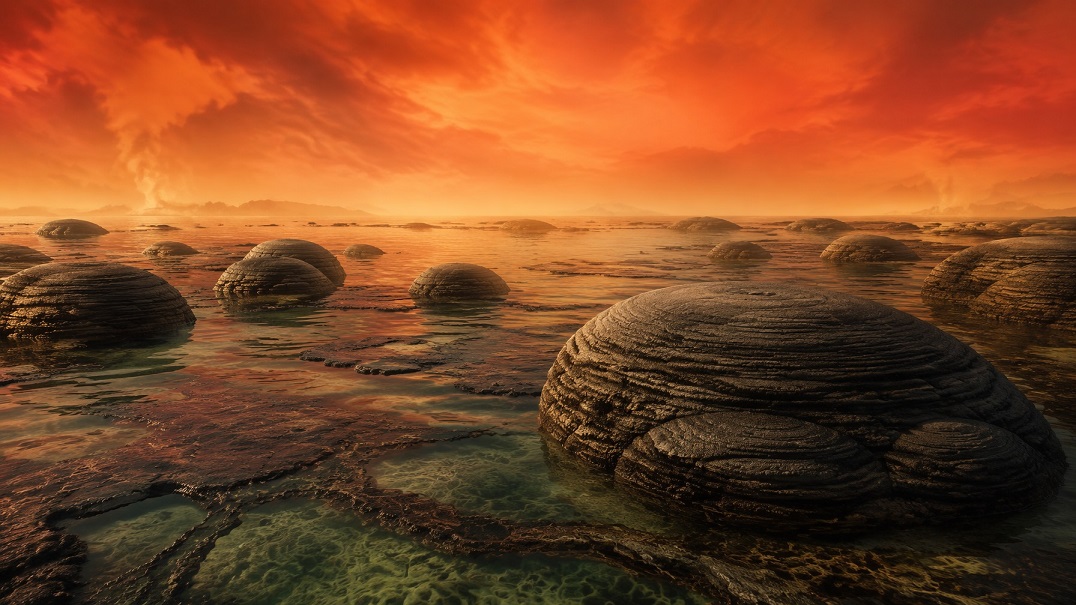
Remarkably, there’s a physical record of the organisms responsible. Ancient cyanobacteria formed layered mats in shallow water that grew into structures called stromatolites, essentially fossilized colonies built up one thin layer at a time over long stretches of time. Some of the oldest known stromatolites, found in Western Australia, are estimated to be around 3.48 billion years old, and similar structures still form today in a handful of extremely salty coastal environments, including Shark Bay in Australia. Standing in front of one is, in a very literal sense, looking at a living relative of the organism that changed the planet’s air.
Oxygen Was Also a Pollution Crisis
It’s tempting to treat the Great Oxidation Event as an unambiguous good thing, since oxygen is what every animal on the planet now depends on to survive. At the time, though, it was closer to an environmental disaster. Oxygen is highly reactive, and to the anaerobic microbes that had dominated Earth up to that point, it was toxic. Many researchers consider the Great Oxidation Event to be the first mass extinction in Earth’s history, wiping out organisms that simply couldn’t tolerate the new, oxygen-rich chemistry that cyanobacteria had created.
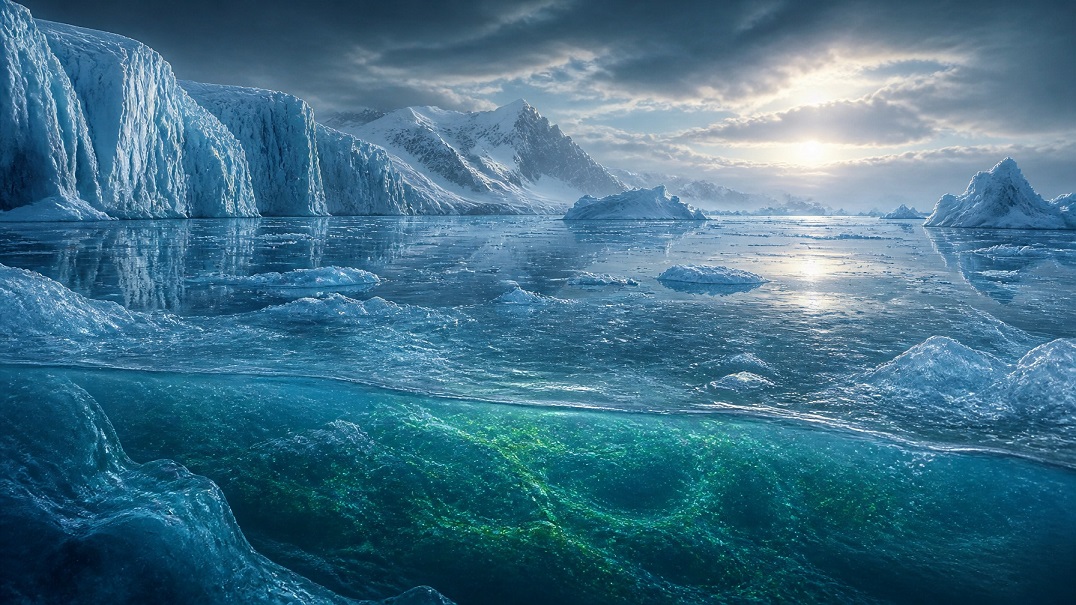
The rising oxygen levels also destabilized methane in the atmosphere, a greenhouse gas that had been helping keep the early Earth warm. As methane broke down, the planet’s temperature dropped sharply, triggering a severe ice age sometimes referred to as a “Snowball Earth” event, with glaciers reportedly extending all the way to tropical latitudes. A single group of photosynthetic microbes didn’t just change the air. It may have frozen the entire planet in the process.
From Ancient Cyanobacteria to Modern DHA Producers
The specific algae species grown today for DHA and EPA, like Schizochytrium and Crypthecodinium cohnii, aren’t the same organisms as those ancient cyanobacteria, and they evolved considerably later, as part of a different, more complex lineage of algae that emerged well after the Great Oxidation Event had already reshaped the planet. But they belong to the same broad category of life: organisms that make their living, directly or indirectly, from sunlight and simple chemistry, and that have been quietly shaping the chemistry of oceans and atmospheres for longer than almost anything else alive.
The oxygen that let animal life evolve in the first place, the oxygen every fish, whale, and human currently depends on, traces back to this same broad group of organisms. Algae didn’t just end up as an ingredient in a modern supplement. In a fairly direct sense, algae built the conditions that made supplements, and the people who take them, possible at all.
Why the History Is Worth Knowing
None of this changes how DHA and EPA function in the human body, and it’s not a reason to buy anything. It’s simply a reminder that the organism behind your omega-3 softgel has a resume that goes back further than almost any other living thing on the planet. Long before algae was cultivated in a fermentation tank for a supplement label, distant relatives of the same broad group were quietly rewriting the atmosphere, one photosynthetic breath at a time.

Frequently Asked Questions
What is the Great Oxidation Event?
The Great Oxidation Event was a period roughly 2.4 billion years ago when oxygen, produced by photosynthetic cyanobacteria, began accumulating significantly in Earth’s atmosphere for the first time. It fundamentally changed the planet’s chemistry and eventually made animal life possible.
Are cyanobacteria the same as the algae used in omega-3 supplements?
No. Cyanobacteria, like the organisms responsible for the Great Oxidation Event, are technically bacteria rather than true algae. Modern omega-3 supplements use different organisms entirely, such as Schizochytrium and Crypthecodinium cohnii, which are eukaryotic microalgae that evolved later.
How old are the oldest known algae-like fossils?
Some of the oldest known stromatolites, layered structures formed by ancient cyanobacteria colonies, have been found in Western Australia and are estimated to be around 3.48 billion years old.
Did algae really cause an ice age?
Many scientists believe the oxygen released during the Great Oxidation Event destabilized atmospheric methane, a greenhouse gas, which may have triggered a severe global cooling event sometimes called “Snowball Earth,” with glaciation reaching tropical latitudes.


