Salmon gets all the credit. Walk down any supplement aisle or read any nutrition article and you’ll see the same message: eat fatty fish for omega-3s, or take a fish oil capsule if you can’t be bothered. Salmon, sardines, mackerel, and tuna have become so synonymous with omega-3 fatty acids that most people assume the fish are making the stuff themselves, the same way they assume a cow makes milk or a bee makes honey.
They aren’t. Not one species of fish in the ocean can manufacture DHA or EPA, the two omega-3 fatty acids everyone actually cares about, from scratch. Every gram of omega-3 in a piece of salmon was made by something else first, and the fish simply held onto it. Once you follow that chain back to the source, the whole “fish oil” story starts to look less like a fact about fish and more like a case of mistaken identity.
The Real Source of Ocean Omega-3s Is Microscopic
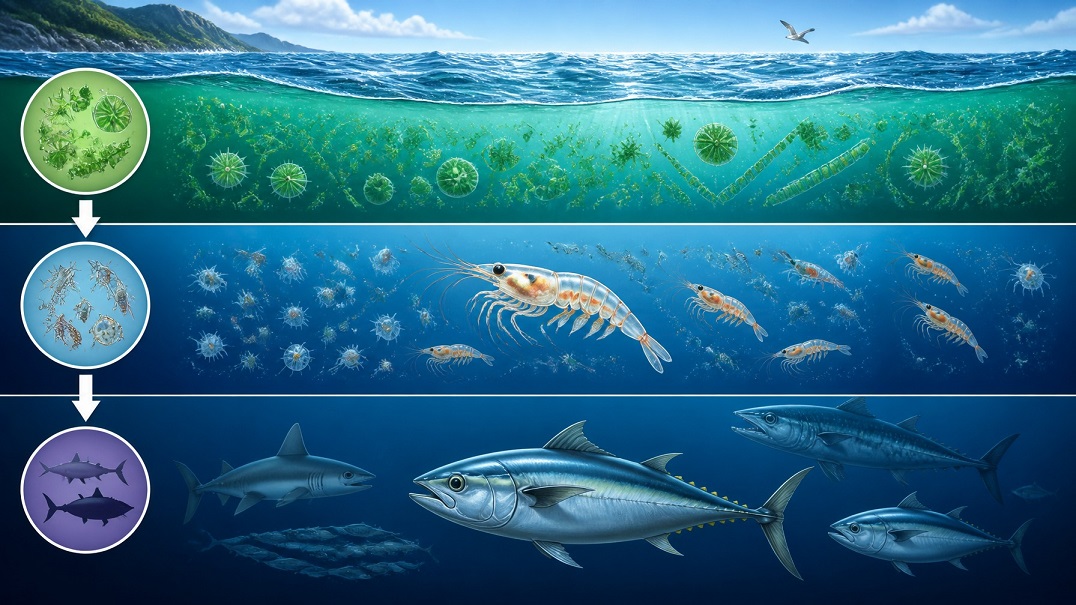
The organisms actually responsible for producing DHA and EPA are marine algae, specifically certain species of microalgae and phytoplankton that live near the ocean’s surface. These are single-celled organisms, invisible to the naked eye individually, but collectively they form the base of nearly every marine food web on the planet. As part of their normal metabolism, some of these algae species synthesize long-chain omega-3 fatty acids.
Nobody put them there for our benefit. The algae aren’t producing DHA as a public service. It’s simply part of how these organisms build and maintain their own cell membranes, particularly in cold water where more flexible fats help cell structures function properly at low temperatures. The omega-3 content of the ocean is, in a sense, an accident of algae biology that the rest of the food chain has been quietly capitalizing on for millions of years.
Why This Surprises People
Most of us never think about phytoplankton at all, let alone credit it for anything on our dinner plate. Algae doesn’t have a marketing budget. It doesn’t get put on nutrition labels or turned into a supplement brand’s origin story, at least not until recently. Fish, on the other hand, are visible, familiar, and easy to photograph next to a bottle of fish oil capsules. It’s a lot easier to sell “wild-caught salmon” than “photosynthetic marine microorganism,” even though the second one is doing the actual work.
How the Omega-3 Moves Up the Food Chain
Once algae produce DHA and EPA, those fatty acids don’t stay put. They move through the ocean food web the same way any nutrient does: by being eaten.
Tiny grazers like zooplankton and krill feed directly on algae, absorbing the omega-3s into their own tissue. Small fish, like sardines, anchovies, and herring, eat the krill and zooplankton in enormous quantities, concentrating those fatty acids further. Larger predatory fish, like salmon, mackerel, and tuna, eat the smaller fish, and the omega-3s concentrate again. By the time a fish reaches your plate, it may be three or four links removed from the algae that actually made the fat in the first place.
Each step in that chain is really just a transfer of stolen goods. The krill didn’t make the DHA. It took it from the algae. The sardine didn’t make it either. It took it from the krill. Every fish in that chain, all the way up to the biggest apex predators in the ocean, including whales that filter-feed on krill by the ton, is living off omega-3s that were synthesized by something too small to see.
A Chain With No Real Bottom, Except One
It’s tempting to think of a food chain as an endless string of animals eating other animals, but every chain has to start somewhere that isn’t an animal at all. In the ocean’s omega-3 story, that starting point is algae. Everything above it, from a two-inch anchovy to a whale that outweighs a school bus, is downstream of a single-celled organism doing photosynthesis near the surface of the water.
Why Farmed Fish Complicate the Story Even Further
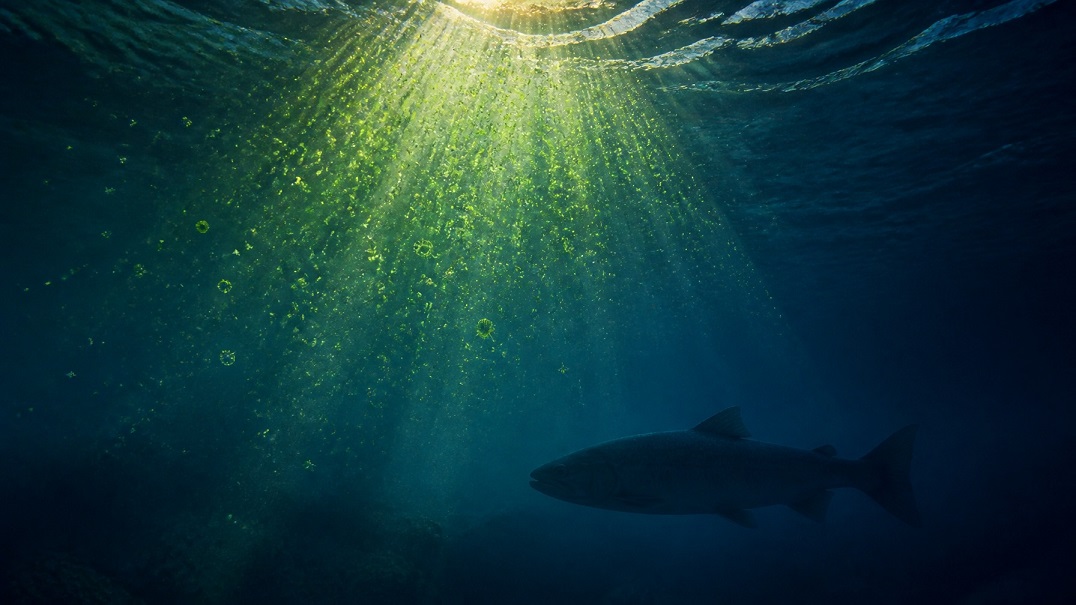
Here’s where the “eat fish for omega-3” advice gets genuinely strange. A large portion of the salmon sold today is farm-raised, which means it doesn’t get its omega-3s from hunting krill and smaller fish in the open ocean at all. Instead, farmed salmon eats a manufactured feed, and the omega-3 content of that feed depends entirely on what the feed producer chooses to put into it.
For years, that meant grinding up wild-caught fish to make fish meal and fish oil for salmon feed, which is a strange kind of shell game: catching wild fish so that farmed fish can have the omega-3s the wild fish got from eating algae in the first place. More recently, some aquaculture feed producers have started adding algae-derived DHA directly into fish feed, which means some of that “farmed salmon” omega-3 content is now algae oil that never passed through a smaller fish at all. The fish becomes, in a very literal sense, a middleman for an ingredient it could never have made on its own.
What This Means If You’re Trying to Get Omega-3 Without Fish
Once you understand where the fatty acids actually originate, algae-based supplements stop looking like a workaround or a substitute for the “real” thing. They’re closer to a shortcut back to the original source. Instead of relying on a chain of predation, from algae to krill to small fish to big fish to your dinner plate, an algae oil supplement skips every intermediate step and delivers the same DHA and EPA that started the whole chain in the first place.
This also explains something that surprises a lot of people the first time they hear it: algae-based DHA isn’t a synthetic or lab-created substitute for fish oil. It’s the same molecule, produced by the same category of organism that fish have relied on all along. The only thing that changes is how many stops it makes along the way.

Frequently Asked Questions
Do fish make their own omega-3 fatty acids?
No. Fish cannot synthesize DHA or EPA on their own. They accumulate these omega-3 fatty acids by eating algae directly or by eating smaller organisms, like krill and other fish, that got their omega-3s from algae further down the food chain.
What produces omega-3s in the ocean?
Certain species of marine microalgae and phytoplankton are the original producers of long-chain omega-3 fatty acids like DHA and EPA in ocean ecosystems. These fatty acids then move up the food chain as algae are eaten by zooplankton and krill, which are eaten by small fish, which are eaten by larger fish.
Is algae oil the same as fish oil?
The omega-3 fatty acids themselves, DHA and EPA, are chemically identical regardless of source. Algae oil provides these fatty acids directly from the algae that originally produced them, while fish oil provides the same fatty acids after they have passed through several links of the marine food chain.
Why do some farmed fish contain less omega-3 than wild fish?
The omega-3 content of farmed fish depends on what the fish are fed. If aquaculture feed contains limited amounts of fish oil or algae-derived DHA, farmed fish can end up with lower omega-3 levels than their wild counterparts, which accumulate omega-3s naturally through the food chain.


