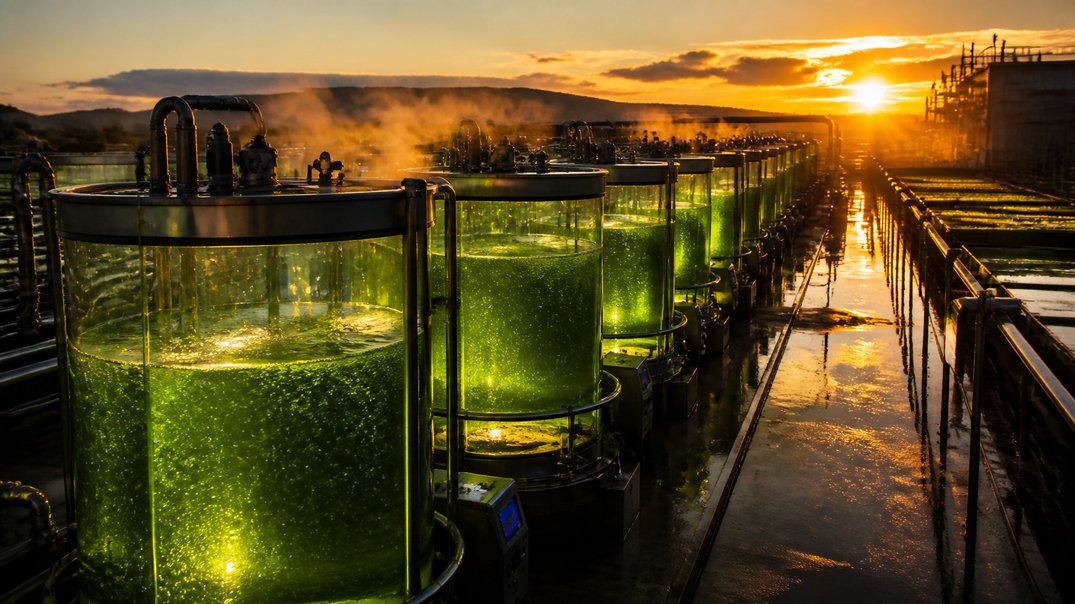
Short answer: Despite the name, most commercial algae grown for omega-3 oil isn’t cultivated in sunlit ponds or photobioreactors at all. It’s grown in the dark, inside large, enclosed stainless-steel fermentation tanks, feeding on sugar as an energy source rather than relying on photosynthesis. This method, called heterotrophic fermentation, allows for fast, tightly controlled production cycles measured in days, a genuinely different process than most people picture when they hear “algae farming.”
The Organisms: Not Your Typical Pond Algae
The species used commercially for omega-3 production, mainly from the genus Schizochytrium along with related organisms like Crypthecodinium cohnii, were specifically selected because of their unusual ability to accumulate large amounts of DHA-rich oil. Research describing this process notes that these heterotrophic microalgae genera were selected specifically for their ability to produce large quantities of DHA from a carbon feedstock through conventional fermentation, rather than through photosynthesis. This is a meaningful distinction from how people typically picture algae; these particular organisms don’t need light at all to grow and produce oil.
Growing in the Dark, Fed on Sugar
Because these algae don’t rely on photosynthesis, they can be cultivated inside large, sealed fermentation tanks similar in concept to those used for brewing or industrial fermentation, entirely disconnected from sunlight, weather, or ocean access. A detailed description of a commercial-scale facility explains that algae are cultivated in large-scale stainless-steel agitated aerobic fermenters, with sugar syrup mixed with nitrogen sources prepared as the fermentation medium, and oil production occurring intracellularly within the algae cells themselves. Some facilities are specifically located next to sugar processing plants, allowing them to use sugarcane byproducts efficiently as both feedstock and, through burning waste plant material called bagasse, a source of energy for drying the harvested algae biomass afterward.
A Fast, Controlled Production Cycle
One of the more striking features of this process is simply how quickly it happens compared with any ocean-based alternative. Research on optimized fermentation conditions found that commercially relevant DHA production could be achieved through a fed-batch fermentation process completed in short cycles of roughly 90 to 100 hours, achieving high biomass densities and strong DHA productivity within that compressed timeframe. That’s about four days from start to finish for a full production cycle, an enormously fast and predictable timeline compared with the months-to-years-long, weather-and-ecosystem-dependent process of catching and processing wild fish for their oil.
From Fermentation Tank to Finished Oil
Once the fermentation cycle completes, the algae broth is harvested and the biomass is separated out and dried, commonly using steam generated from the same agricultural byproducts that fed the process in the first place. The dried algae biomass is then processed to extract the oil accumulated inside the cells, which is subsequently purified and concentrated using methods similar in principle to those used for fish oil, though starting from a fundamentally different raw material. The main byproduct of the fermentation process itself is carbon dioxide, released as the microorganisms metabolize the sugar feedstock for energy, similar to the CO2 released during other industrial fermentation processes like brewing.
What This Means in Practice
- Commercial algae oil production doesn’t require sunlight, ponds, or ocean access. It happens inside sealed, controlled fermentation tanks fed on sugar rather than relying on photosynthesis.
- The production cycle is remarkably fast, typically completing in under a week. This is a dramatically different timeline than the wild fishing and processing supply chain fish oil depends on.
- The process uses agricultural feedstock, commonly sugar, as its energy source. This ties algae oil production’s environmental footprint to agricultural inputs rather than ocean harvesting.
So “farming algae” for omega-3 looks considerably more like industrial fermentation than agriculture in the traditional sense, closer in spirit to how yeast or certain pharmaceuticals are produced than to picturing rows of green ponds under open sky. It’s a genuinely modern, engineered production method built specifically to deliver the same fatty acids fish accumulate naturally, just without the fish, the ocean, or the years-long supply chain in between.


