Ask most people to picture how algae oil is made, and you’ll probably get some version of the same mental image: a pond, a net, maybe a person in waders scooping up green scum and squeezing it into a jar. The actual process looks almost nothing like that. Commercial algae oil is produced indoors, in the dark, in sealed steel tanks, using a process that has more in common with brewing beer than with harvesting seaweed off a beach. There’s no sunlight involved at any point, no open water, and often no ocean anywhere near the facility.
Here’s what actually happens between a vial of algae cells and the softgel capsule sitting in a supplement bottle.
It Starts With Algae That Doesn’t Need Sunlight
The species most commonly used for commercial DHA production, primarily Schizochytrium and Crypthecodinium cohnii, have an unusual trait that makes large-scale production possible in the first place: they can grow without photosynthesis. Instead of relying on light for energy, these organisms are heterotrophic, meaning they can consume sugar directly as a food source, the same basic strategy yeast uses to ferment beer or bread. That single trait is what allows algae oil to be produced indoors, at any time of year, completely independent of sunlight, weather, or the ocean.
Why This Matters for Scale
Photosynthetic organisms are limited by how much light they can capture, which caps how densely they can be grown in a given space. Heterotrophic algae aren’t limited that way. They can be grown at very high densities in enclosed tanks, fed a controlled diet, and scaled up or down based on demand rather than daylight hours. It’s the difference between farming that depends on the seasons and manufacturing that runs on a schedule.
Fermentation: Feeding the Algae in the Dark
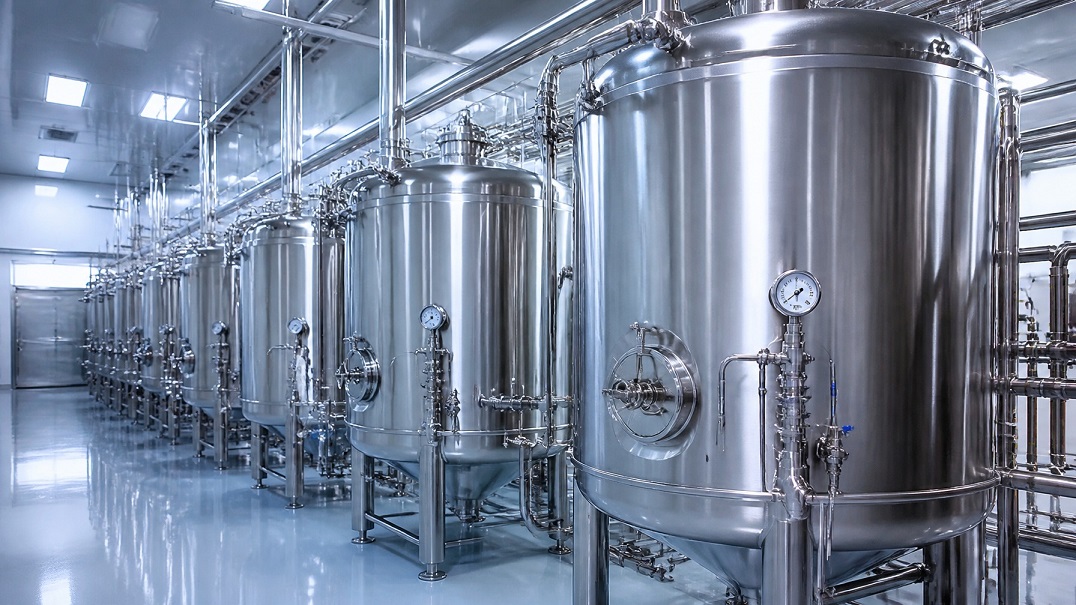
Production begins in a fermenter, essentially a large, sealed, sterilized steel tank filled with a nutrient solution. The algae are introduced along with a carbon source, typically glucose or another sugar, and a nitrogen source such as yeast extract, which the cells need early on to grow and multiply.
The Nitrogen Trick That Boosts Oil Production
Partway through fermentation, something counterintuitive happens: the nitrogen supply is deliberately allowed to run out while the sugar keeps flowing. Starved of nitrogen but still well fed on carbon, the algae cells shift their metabolism toward storing fat, packing away oil, rich in DHA, as an energy reserve. This nitrogen-starvation phase is what pushes the oil content of the cells up dramatically before harvest. A full fermentation cycle typically runs somewhere in the range of two to four days from start to finish.
Harvesting and Breaking Open the Cells
Once fermentation is complete, the algae cells are separated from the surrounding broth, typically using high-speed centrifugation, which spins the mixture fast enough to concentrate the solid algae biomass away from the liquid. What’s left is a thick paste of oil-rich algae cells.
The oil is locked inside those cells, though, which means the cell walls have to be broken open before it can be extracted. Manufacturers use methods like high-pressure homogenization or other cell-disruption techniques to rupture the cells and release their contents, setting up the next stage of the process.
Extracting and Purifying the Oil
With the cells broken open, the oil can be separated out. Depending on the manufacturer, this is done through mechanical pressing, solvent-based extraction, or supercritical extraction methods designed specifically to protect the fragile DHA molecule, which can be damaged by excessive heat or harsh processing.
Refining the Crude Oil
The oil that comes out of extraction is considered crude and still contains material that needs to be removed before it’s suitable for a supplement bottle. Refining typically involves several steps: removing phospholipids and free fatty acids, neutralizing residual acids to stabilize the oil, and a cooling step called winterization that removes waxes and saturated fats to improve clarity. A final purification step concentrates the DHA and EPA content and screens for heavy metals and other contaminants, since even though this algae oil never touched the ocean, food-safety testing standards still apply.
Turning Oil Into a Softgel
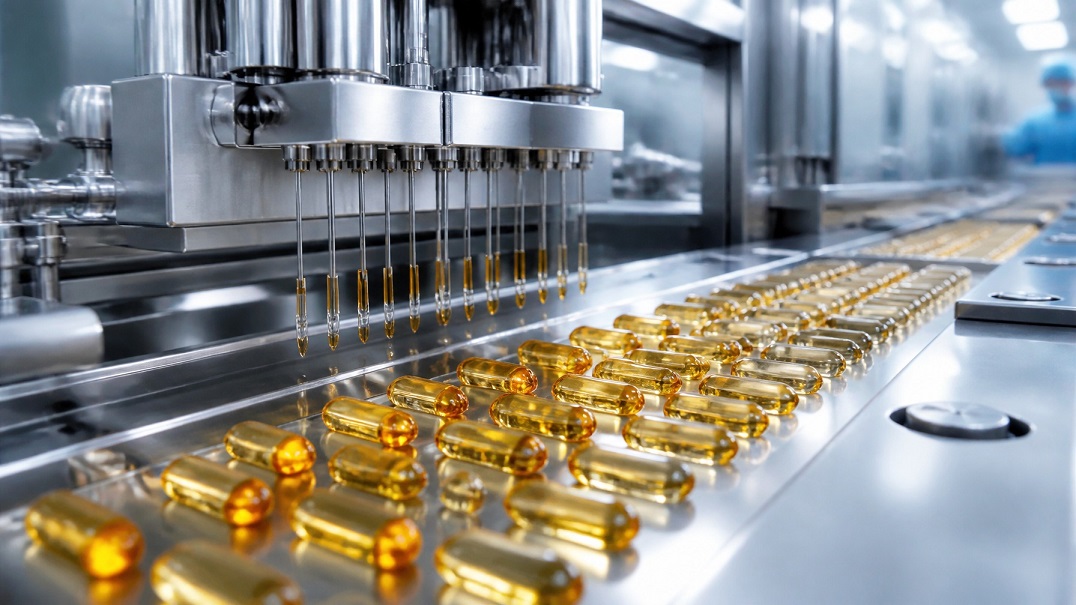
The final stage is encapsulation. The purified algae oil is mixed with a small amount of antioxidant, typically a form of vitamin E, to help slow future oxidation, then sealed inside a soft, gelatin-based shell, often made from a plant-based alternative for algae products marketed as vegan. The capsules are formed, dried under controlled humidity and temperature, and then given a stress-relief step, essentially a final conditioning period, to eliminate any bubbles or surface imperfections before they’re packaged.
From that point, the softgel that ends up in a bottle on a shelf is a sealed, shelf-stable, precisely dosed unit, a fairly significant transformation from a beaker of dark, unremarkable algae cells fed sugar in a steel tank.
Why the Process Looks Nothing Like the Popular Image
The gap between the popular mental image of algae harvesting and the actual industrial process comes down to one basic fact: the algae species used for DHA production were never meant to be harvested from open water in the first place. They’re cultivated specifically because they can be grown reliably, indoors, at scale, on a controlled diet, which is exactly the opposite of scooping something out of a pond. It’s less “harvest” and more “brew,” which is a strange thing to picture the next time you take a softgel, but an accurate one.

Frequently Asked Questions
Does algae oil come from the ocean?
Not directly. While the algae species used for DHA production, like Schizochytrium and Crypthecodinium cohnii, are marine organisms, they are grown in enclosed, sterilized fermentation tanks rather than harvested from the open ocean.
Does algae oil production require sunlight?
No. The algae species used commercially for DHA production are heterotrophic, meaning they consume sugar directly as an energy source rather than relying on photosynthesis, which allows them to be grown indoors in the dark at high density.
How is DHA extracted from algae cells?
After fermentation, algae cells are harvested through centrifugation, then broken open using methods like high-pressure homogenization to release the oil inside. The oil is then extracted using mechanical pressing or solvent-based methods and refined to remove impurities.
Why is nitrogen deliberately reduced during algae oil fermentation?
Limiting nitrogen while maintaining a steady sugar supply causes the algae cells to shift their metabolism toward storing fat rather than continuing to multiply, which significantly increases the oil, and DHA, content of the cells before harvest.


