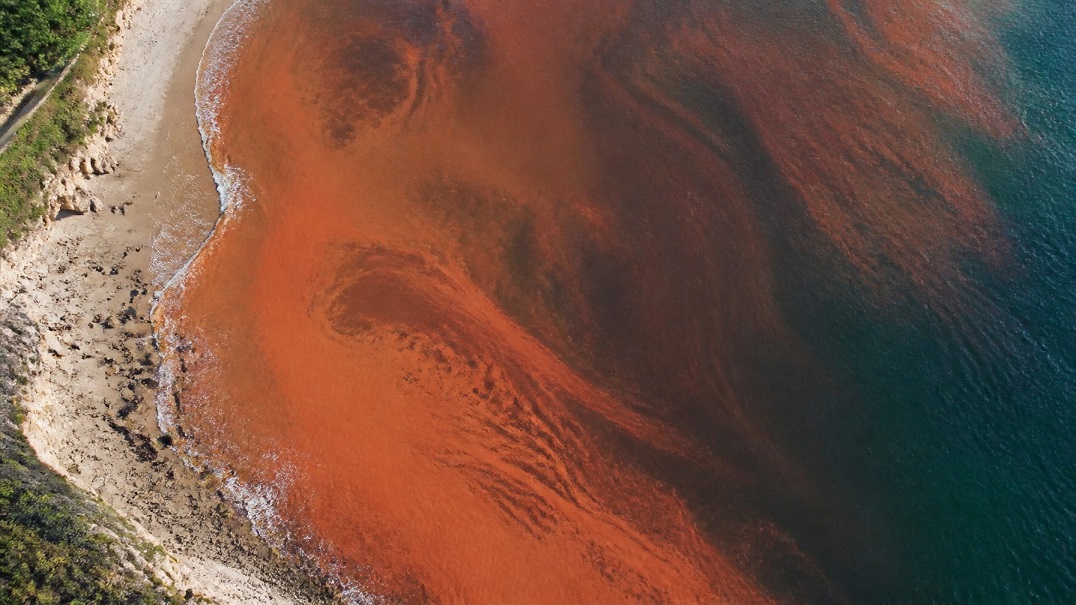
Say the word “algae” to most people and the first image that comes to mind probably isn’t a softgel capsule. It’s more likely to be a closed beach, a dead fish washed up on the sand, or a warning sign about water quality. Algae has a genuine public relations problem, and honestly, it’s earned it in certain contexts. The same word that describes the organism responsible for a coastal fish kill also describes the organism grown in a fermentation tank to produce the DHA in an omega-3 supplement. That’s a strange amount of reputational ground for one word to cover.
Understanding why “algae” gets used for both a public health hazard and a health supplement isn’t just a fun bit of trivia. It actually clears up a lot of confusion for anyone who hears “algae oil” and instinctively pictures a stretch of murky green water they wouldn’t want to swim in.
What a Red Tide Actually Is
A red tide is a type of harmful algal bloom, an explosive overgrowth of certain algae species that can discolor coastal water, in Florida and Texas most commonly caused by a single-celled organism called Karenia brevis. When conditions are right, usually when a surge of nutrients, often from agricultural or urban runoff, washes into coastal waters, this algae can multiply rapidly enough to tint the water a visible reddish-brown.
The color isn’t really the problem. The problem is what Karenia brevis produces along the way: a group of potent neurotoxins called brevetoxins. These toxins are lethal to fish in large enough concentrations, and during severe blooms, dead fish washing up on shore in large numbers is a common and unmistakable sign that a red tide is underway.
The Damage Isn’t Limited to Fish
Brevetoxins move through the food chain in a way that causes real harm well beyond fish. Shellfish like oysters, clams, and mussels filter-feed on the algae and can accumulate the toxin to dangerous levels, which is why regulators close shellfish harvesting during active blooms and why eating contaminated shellfish can cause neurotoxic shellfish poisoning in humans. Marine mammals and birds have also died in significant numbers during major bloom events, and the toxin can even become airborne in sea spray, causing eye irritation, coughing, and respiratory distress in people simply walking along an affected beach, particularly those with asthma or other respiratory conditions.
Red tides also carry a real economic cost. Beach closures and disrupted seafood harvests during major bloom events have been estimated to cost the tourism and hospitality industry in the United States tens of millions of dollars in a single year.
Why the Same Word Applies to a Supplement Ingredient
“Algae” isn’t a single species. It’s an enormous, loosely related category of organisms that ranges from the microscopic dinoflagellate behind a red tide to the seaweed wrapped around a piece of sushi to the cultivated microalgae grown specifically to produce DHA. Lumping them all under one word is a bit like using the word “mammal” to describe both a house cat and a grizzly bear. Technically accurate, but not exactly useful for figuring out which one you’re dealing with.
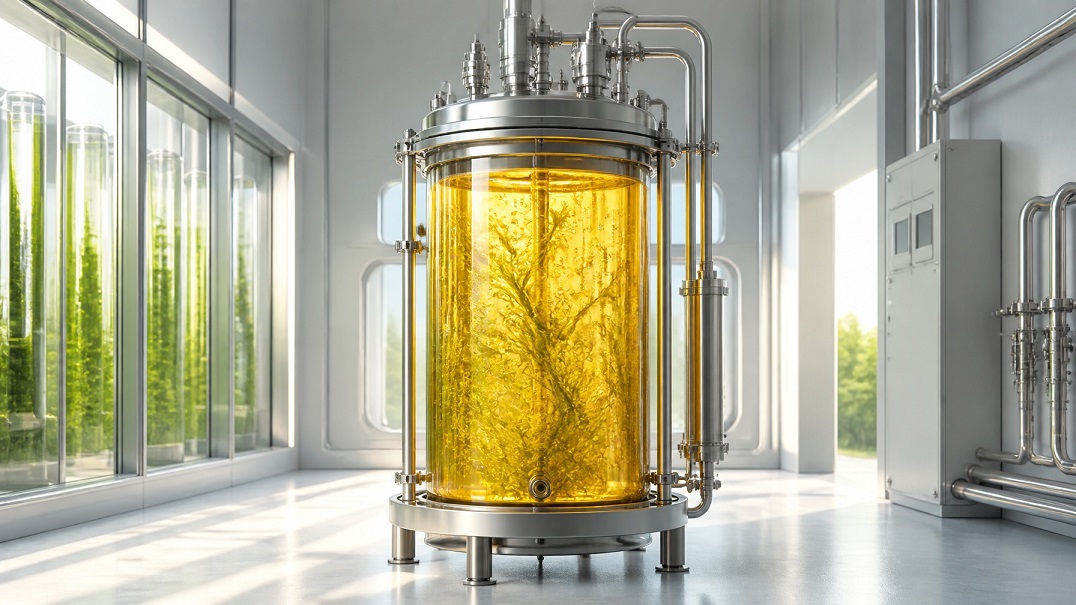
The algae species used in omega-3 supplements, most commonly Schizochytrium, isn’t related to Karenia brevis in any meaningful practical sense, and it isn’t harvested from open, uncontrolled ocean water at all. It’s grown in enclosed fermentation tanks, in a carefully controlled environment with a defined feedstock, under conditions designed specifically to prevent the kind of uncontrolled, contaminant-laden growth that defines a harmful algal bloom. A red tide is what happens when algae grows exactly where nobody wants it, in response to pollution, with no oversight of what it produces. A commercial DHA culture is close to the opposite: algae grown exactly where someone wants it, under close observation, specifically because of what it produces.
Why the Confusion Persists Anyway
Part of the issue is simply visibility. Red tides make the news. They close beaches, kill wildlife visibly, and generate dramatic photographs of dead fish along a shoreline, so that’s the association many people form with the word “algae” long before they ever consider an algae-based supplement. Nobody photographs a fermentation tank producing DHA for a news segment, so the quieter, more mundane form of algae cultivation simply doesn’t compete for the same attention.
There’s also a language problem baked into common usage. Cyanobacteria, the organisms behind certain freshwater toxic blooms, get casually called “blue-green algae” even though they’re technically bacteria, not true algae at all. Add in the fact that “algae” gets used for everything from pond scum to sushi wrappers to fermentation-tank DHA, and it’s easy to see why the word alone doesn’t tell anyone much about what they’re actually looking at.
What Actually Distinguishes a Safe Algae Product
The relevant question is never really “is it algae.” It’s which species, and how was it grown. A reputable algae-based omega-3 supplement will typically be able to tell you the specific strain used, generally Schizochytrium or a related species selected for DHA production, and confirm that it was cultivated in a closed, controlled system rather than harvested from open water. That distinction, closed cultivation versus open-water bloom, is really the entire story. It’s the difference between an organism grown deliberately for a specific, tested purpose and the same broad category of organism doing whatever it wants in response to a nutrient spill.

Frequently Asked Questions
Not in any meaningful sense. Red tides in the United States are most commonly caused by Karenia brevis, while commercial DHA supplements are typically made from Schizochytrium or similar species. They belong to a broad, loosely related category of organisms but serve completely different biological roles and are handled in entirely different ways.
What causes a red tide?
Red tides occur when certain algae species, most notably Karenia brevis along the Gulf Coast, grow explosively in response to favorable conditions, often including a surge of nutrients from agricultural or urban runoff entering coastal waters.
Is it safe to eat algae-based supplements if red tide algae is toxic?
Yes. Algae-based omega-3 supplements are made from species selected specifically for safety and nutrient production, grown in closed, controlled fermentation systems rather than harvested from open ocean water where a harmful bloom could occur. This is a fundamentally different process from what produces a toxic red tide.
Why is “blue-green algae” sometimes used to describe toxic blooms?
“Blue-green algae” is a common but technically inaccurate name for cyanobacteria, a group of bacteria capable of producing toxins during certain freshwater blooms. Despite the name, cyanobacteria are not true algae, which adds to the general confusion around the word “algae” itself.


