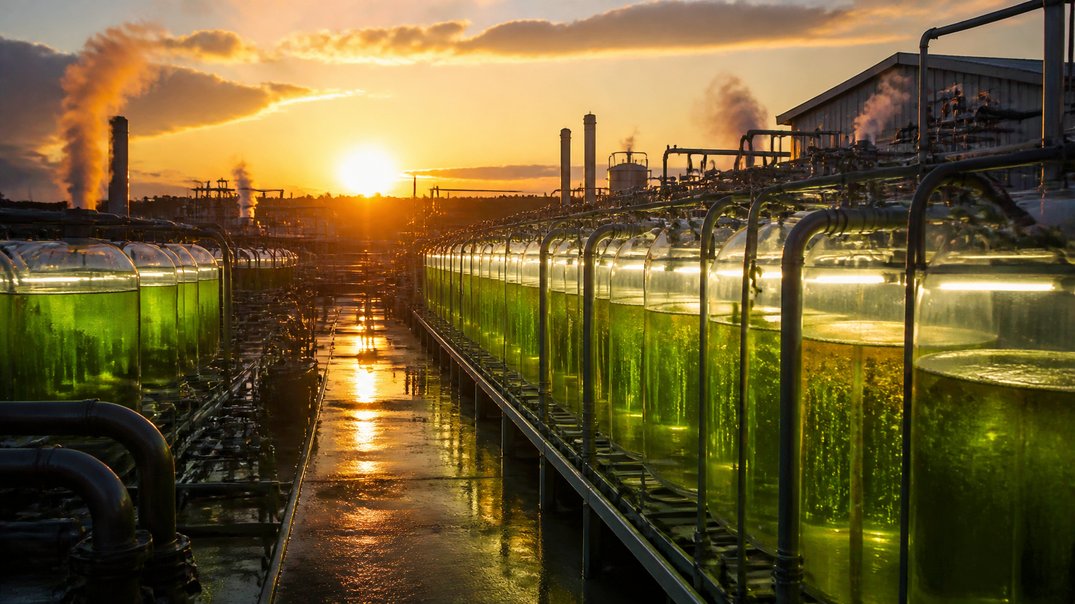
Algae oil production is moving from a niche process to an industrial one as fish oil supplies swing and demand for vegan omega-3 rises. Leading producers grow microalgae in closed fermentation tanks, and companies including Veramaris, Corbion, dsm-firmenich, and Mara Renewables are adding capacity. High costs, finicky strains, and heavy demand from fish farming still limit how fast supply can grow. This article covers where the race stands and what it means for supplement buyers.
Why Fish Oil Supply Is Pushing Demand Toward Algae Omega-3
Fish do not make EPA and DHA on their own. A published review of microalgae oil notes that these fats originate with algae in aquatic ecosystems and build up as they move through the food chain. Growing the algae directly removes the middle step.
Wild supply also swings from year to year. When Peru, the world’s leading fish oil producer, canceled the first of two anchovy seasons in 2023, the decision caused major supply constraints for EPA and DHA. A 2023 report commissioned by the omega-3 trade group GOED warned that resource limits and climate pressure are likely to keep causing price shocks.
Algae oil is also a recognized consumer option. The NIH Office of Dietary Supplements lists algal oil, a vegetarian source, among the main types of omega-3 supplements.
How Fermentation Makes Algae Oil Production Scalable
Instead of relying on sunlight, many producers use tanks. Corbion, for example, grows microalgae in closed fermentation tanks where sugars turn into algae within a few days, and the company calls skipping light a critical factor for scale and feasibility.

Heterotrophic Strains and Sugar Feedstocks
Heterotrophic algae feed on sugar instead of light. One example, Crypthecodinium cohnii, produces DHA without light, according to a TU Berlin scale-up study. Veramaris uses a proprietary Schizochytrium strain and says its oil carries twice the EPA and DHA concentration of traditional fish oil. Corbion runs on locally sourced sugar cane and reports a life cycle assessment showing a lower carbon footprint than fish oil sources. Those results come from the companies themselves, so treat them as claims awaiting independent review.
Technical Hurdles at Industrial Volume
Moving from lab flask to giant tank brings real engineering problems. The TU Berlin researchers note that C. cohnii is sensitive to shear, needs a lot of oxygen, and grows in a high-chloride medium that corrodes common stainless steel reactors. EPA is harder still. NutraIngredients reported that the main barriers to commercial EPA from microalgae have been the high cost of producing biomass and extracting the oil efficiently.
Who Is Expanding Algae Oil Capacity
Several companies are building out supply, though much of it is aimed at animal feed rather than capsules.
- Veramaris, a DSM and Evonik joint venture, built a $200 million plant in Blair, Nebraska. The company says its capacity equals 1.2 million tonnes of wild-caught fish and covers about 15 percent of global salmon farming demand for EPA and DHA.
- Corbion says its algae ingredients averted the capture of over 1.5 million metric tons of fish over five years.
- Mara Renewables raised $9.1 million from S2G Investments in July 2025 to expand its algae-derived omega-3 production.
- dsm-firmenich launched an algal oil with 545 mg of DHA per gram, which enables smaller, more cost-effective capsules.
Veramaris makes its oil for animal nutrition, which suggests aquaculture is a major early customer for new volume.

Algae Oil Market Size and Cost Pressures
Published estimates vary widely. IMARC valued the global algae oil market at $2.0 billion in 2023 and projects 3.8 percent annual growth through 2032. Global Market Insights puts the 2023 figure at $5.2 billion with growth above 5.9 percent a year. Differences in scope and method make the numbers hard to compare, so read them as a direction rather than a measurement.
Cost is the shared concern. Global Market Insights says cultivating, harvesting, and extracting algae oil still costs more than traditional oils, though it also credits advances in cultivation and extraction with improving cost efficiency.
What Scaling Means for Algae Omega-3 Supplements
Bigger plants should make supply steadier, because fermentation does not depend on fishing quotas or ocean conditions. More potent oils may also shrink capsule counts. These are expectations, not guarantees, and prices will depend on how quickly costs fall.
When comparing products, check the label for DHA and EPA per serving rather than total oil. The NIH notes that omega-3 supplements may interact with medications, so ask a healthcare provider before starting one.
Frequently Asked Questions About Algae Oil Production
Short answers to common questions about how algae oil is made and scaled.
Is Algae Oil Production Sustainable?
It removes the need to catch wild fish for omega-3. Corbion reports a lower carbon footprint than fish oil sources based on a life cycle assessment, but that result comes from the company, and real impact still depends on the sugar feedstock and energy each plant uses.
Why Does Algae Oil Often Cost More Than Fish Oil?
Global Market Insights says growing, harvesting, and extracting algae oil remains costly compared with traditional oils. Larger plants and better strains are the main ways producers hope to narrow the gap.
Which Algae Are Used to Make Omega-3 Oil?
Common examples include Schizochytrium, which Veramaris uses, and Crypthecodinium cohnii, which researchers have studied for DHA production.
Does Algae Oil Contain Both EPA and DHA?
It depends on the strain. The Veramaris oil is rich in both, while the dsm-firmenich product described above is mostly DHA, with 545 mg of DHA and 80 mg of EPA per gram.


