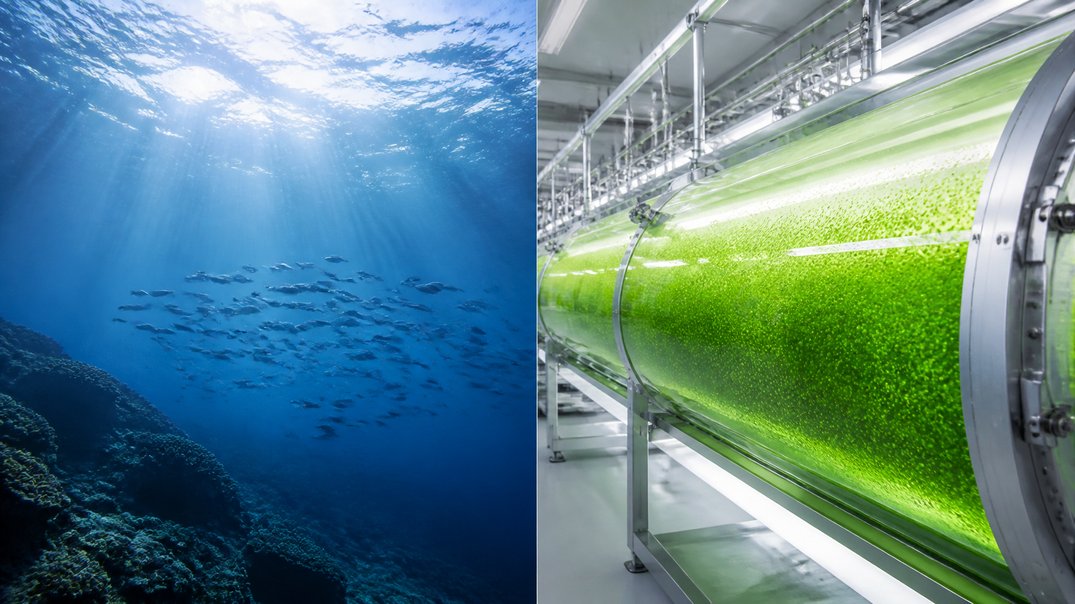
Algae may help stretch the world’s protein supply as climate change strains farmland and water, but today it remains a tiny part of the food system. Some microalgae reach 50 to 70 percent protein by dry weight and can grow on non-arable land, yet global output was under 57,000 tonnes in 2019, compared with 9.4 billion tonnes of primary crops. This article weighs the promise against the hurdles in cost, regulation, and flavor.
How Climate Change Strains Protein and Water Supplies
Food production already takes a heavy toll on natural resources. A review in PubMed Central reports that global food production accounts for about half of water consumption and that roughly one-third of arable land has been lost or degraded. It also says the beef industry uses nearly one-third of global water use.
Supply shocks add pressure. A European Commission feature links disruptions such as the loss of Ukrainian grain exports to rising food prices. UC San Diego biologist Stephen Mayfield argues, in a Nutrition Insight report on a study in Frontiers in Nutrition, that the world must become more efficient at producing protein as the population passes eight billion.
Algae Protein Potential and Farmland Savings
Some microalgae strains contain up to 70 percent protein by dry weight, according to the PubMed Central review. Because they can grow on non-arable land, in seawater or freshwater, expanding output need not compete with farmland.
Protein Yield Claims
Mayfield estimates that algae could yield at least ten times, and perhaps twenty times, more protein per acre than soybeans. That is his own estimate and has not been independently verified. Earlier studies cited in the same report projected that microalgae could replace 25 percent of protein consumption in Europe, which is a projection rather than a result.

Brackish Water and Wastewater
Some species grow in brackish, salty, or wastewater, which could free freshwater for other uses, the Nutrition Insight report says. The PubMed Central review likewise notes that microalgae can use wastewater or recirculated freshwater, though it gives no figures.
Climate Benefits and Limits of Algae Farming
Algae’s climate case rests mainly on carbon capture and methane reduction, and some figures come from early research.
Carbon Capture and Livestock Methane
The PubMed Central review reports that microalgae show 10 to 50 times the carbon sequestration efficiency of land plants. It also cites a study in which adding 0.2 percent of the red seaweed Asparagopsis taxiformis to cattle feed cut methane by nearly 100 percent. These are results from specific studies, and farm-scale outcomes will need confirmation.
Cost and Scale Barriers
Production remains small, under 57,000 tonnes in 2019 versus 9.4 billion tonnes of primary crops. Many steps still rely on manual labor, and cleaning and drying the biomass add cost. According to the PubMed Central review, open ponds use less energy but carry a higher contamination risk, while closed photobioreactors lower that risk but cost more to build and run.

Regulation, Flavor, and Nutrition Hurdles for Algae Foods
Even inexpensive algae has to clear regulators and win over eaters. In the European Union, novel foods need pre-market authorization, and only seven microalgae species are authorized for food or feed. In the United States, the PubMed Central review says spirulina and several other strains have GRAS status.
Flavor is another hurdle. Nutrition Insight reports that algae’s fishy taste needs to be reduced for broad appeal, and it cites a Danish company that expanded production of a neutral-flavored ingredient. Nutrition has caveats too: plant iron is absorbed at 1 to 10 percent, versus 25 to 30 percent from animal products, per the PubMed Central review.
Existing traditions show what is possible. The European Commission feature credits Lake Chad spirulina with improving nutrition in Chad.
Algae Omega-3 as a Climate-Resilient Fish Oil Alternative
The European Commission feature notes that microalgae supply omega-3 fatty acids, offering an alternative to fish-derived oils that carry overfishing risks. Wild supply can swing sharply. When Peru canceled the first of two anchovy seasons in 2023, the decision caused major supply constraints for EPA and DHA. Algae grown in fermentation tanks does not depend on ocean conditions or fishing quotas, which makes it a steadier source as climate pressures grow.
Frequently Asked Questions About Algae and Food Security
Short answers to common questions about algae, food supply, and climate.
Can Algae Replace Traditional Crops?
Not on current evidence. Output was under 57,000 tonnes in 2019 versus 9.4 billion tonnes of primary crops, so algae is best viewed as a complement to farming.
Does Algae Farming Need Farmland?
Microalgae can grow on non-arable land in seawater or freshwater, so they need not compete with crops for fields, according to a European Commission feature.
Is Algae Farming Good for the Climate?
Reviews report high carbon sequestration efficiency and large methane cuts when seaweed is added to cattle feed. Energy use and costs vary by system, so the benefit depends on how the algae is grown.
Which Algae Are Approved for Food?
In the United States, several strains, including spirulina, have GRAS status. The European Union has authorized only seven microalgae species for food or feed.


