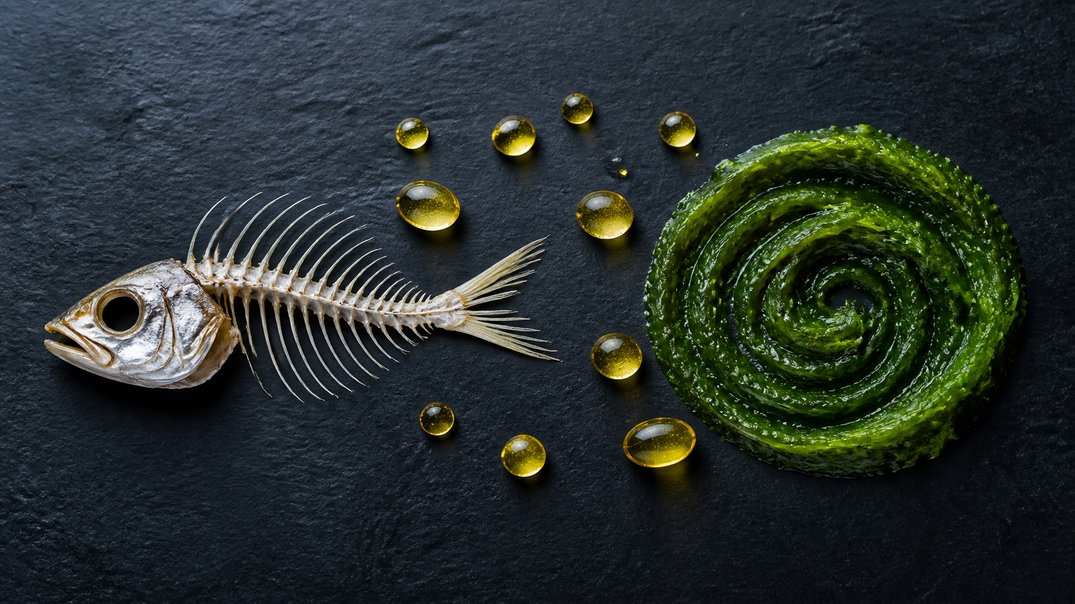
Algae is neither fish nor shellfish, and one board-certified allergist says people with shellfish allergies can safely consume algae-based supplements. Fish oil, by contrast, carries a small and unsettled risk according to another allergist. Even so, individual allergies vary, so check the full label, including the capsule, and confirm with your own allergist. This article summarizes what experts have said and how to shop carefully.
Why Algae Oil Differs From Fish and Shellfish Oils
Fish and shellfish are animals, and the FDA treats them as separate entries on its list of nine major food allergens. Algae appears on neither list. Under the same rules, a food containing a major allergen must be labeled with the name of the allergen source.
Algae oil is also the original source of the omega-3 fats found in fish oil. A published review of microalgae oil notes that these fats originate with algae in aquatic ecosystems and that fish pick them up through the food chain. The NIH Office of Dietary Supplements describes algal oil as a vegetarian source of omega-3s.
What Allergists Say About Fish Oil and Seafood Allergy
The question matters because many people with seafood allergies are told to avoid fish oil. In an April 2023 answer for the American Academy of Allergy, Asthma and Immunology, allergist Dr. Jeffrey Demain addressed fish oil for patients with shellfish allergy.
Shellfish Allergy and Fish Oil
Dr. Demain wrote that for shellfish-allergic patients who tolerate finned fish, it is very unlikely that fish oil would present a risk. He noted that processing should remove the protein allergen but that this cannot be guaranteed.
Fish Allergy and Fish Oil
The evidence for fish allergy is thin. Dr. Demain cited a case report of a fish-allergic adult who had symptoms after starting fish oil and a small study of six fish-allergic patients who passed oral challenges with two fish oil supplements. He called neither strong enough to settle the question, noted that products vary, and said a supervised in-office oral challenge may be reasonable. His answer did not discuss algae oil.
What Allergists Say About Algae Oil
On algae, the answer is more direct. In a July 2024 reply on Kids With Food Allergies, a division of the Asthma and Allergy Foundation of America, allergist Dr. John James said people with shellfish allergies can safely consume algae and algae-based supplements, and that algae is not shellfish.
That is one physician’s answer to a general question, and it does not replace advice about your own history. The reply also did not discuss processing or cross-contact. A reader comment on the same page, written by a non-physician, reported a reaction to packaged nori and urged caution with seaweed snacks. That is anecdotal, and it concerns seaweed foods rather than refined algae oil, but it shows why product details matter. The sources I reviewed addressed shellfish allergy specifically, so people with fish allergy should confirm with an allergist as well.

Label Checks Before You Buy Algae Oil
A careful label review takes a few minutes and covers most of the practical risk.
- Read the entire ingredient list, including the capsule shell and any flavorings.
- Look for allergen statements, and confirm the product is made only from algae.
- Contact the manufacturer to ask about cross-contact with fish or shellfish at the facility.
- Bring the label to your allergist before your first dose.
When to Talk to an Allergist First
Seek individual advice if you have severe or multiple allergies, a history of anaphylaxis, or reactions to seaweed products. An allergist can weigh your history and may suggest a supervised trial, as Dr. Demain described for fish oil. Also tell your healthcare provider about any medications. NIH says omega-3 side effects are usually mild, the FDA recommends no more than 5 grams per day of EPA and DHA combined from supplements, and high doses may cause bleeding problems in people taking anticoagulants.
Frequently Asked Questions About Algae Oil and Seafood Allergies
Short answers to common questions, with the reminder that none replaces advice from your allergist.
Is Algae Oil Fish-Free?
Algae oil comes from algae, not fish. Still, confirm that your specific product is made only from algae and that the capsule shell has no animal ingredients you react to.
Can Someone With a Shellfish Allergy Take Algae Oil?
One board-certified allergist has said people with shellfish allergies can safely consume algae-based supplements. Check with your own allergist, especially if your allergy is severe.
Is Algae Oil Safe for a Fish Allergy?
Algae is not a fish, and fish is a separate major allergen. The expert answers reviewed here focused on shellfish, so ask your allergist to confirm for your situation.
Why Check Labels Even if Algae Is Not an Animal?
Products can contain other ingredients, and facilities can handle several allergens. The FDA requires foods with a major allergen to name its source, but you still need to read the whole label.


