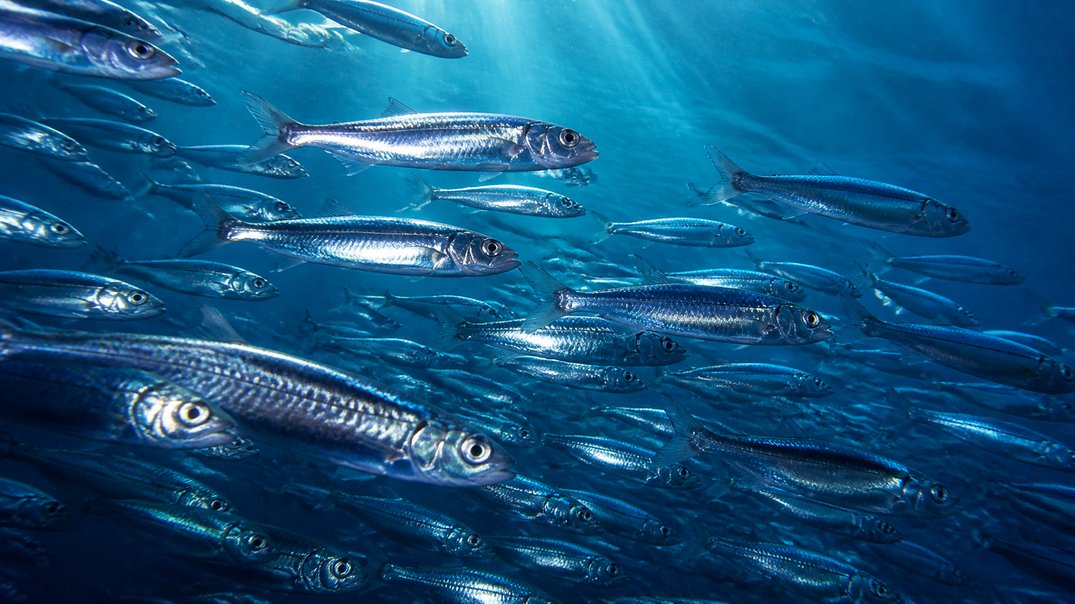
Short answer: Fish don’t actually manufacture omega-3 fatty acids themselves. The EPA and DHA found in salmon, sardines, and other fatty fish originate with microscopic marine algae, which are capable of producing these fatty acids from scratch. Fish accumulate omega-3s by eating that algae directly, or more commonly, by eating smaller organisms further up the food chain that ate the algae first. In a very real sense, fish oil is borrowed material, passed up through the marine food web rather than made in the fish itself.
The Original Producers: Marine Algae and Phytoplankton
The capacity to synthesize long-chain omega-3 fatty acids from simpler building blocks is a relatively rare biological trait, and in the ocean, it belongs mainly to microalgae and phytoplankton sitting at the base of the marine food web. A patent filing describing omega-3 production notes that the primary natural source of omega-3 fatty acids in fish oil is in fact marine unicellular microbes such as algae and diatoms, which sit at the base of the aquatic food web and use these fatty acids as components of their photosynthetic membranes. These organisms aren’t making omega-3s as a courtesy to fish or to future supplement users; the fatty acids serve a direct structural and functional purpose in the algae’s own cell membranes, particularly membranes involved in capturing sunlight for photosynthesis.
How the Fatty Acids Move Up the Food Chain
Once algae produce these fatty acids, they don’t stay put. Zooplankton and other small marine organisms graze on algae and phytoplankton, incorporating the omega-3s into their own tissues in the process. Small fish then eat the zooplankton, larger fish eat the smaller fish, and the omega-3 content accumulates and concentrates at each step up the chain. A review discussing omega-3 biosynthesis explains that microalgae accumulate omega-3 fatty acids in the tissues of fish specifically through the fish consuming phytoplankton, which is essentially a plain description of how a nutrient produced by a microscopic organism ends up concentrated in something as large as a salmon or tuna. This is why oily, predatory fish tend to carry more omega-3s than smaller, lower-food-chain species; they’ve had more opportunities to accumulate it through what they’ve eaten.
Fish Can’t Make Enough of Their Own
It’s worth being precise here: fish aren’t entirely incapable of any omega-3-related chemistry, but like humans, they generally can’t efficiently synthesize meaningful amounts of EPA and DHA from scratch on their own. This is a big part of why diet, both for fish in the wild and for farmed fish, has such a direct effect on how much omega-3 ends up in their flesh. Wild fish accumulate omega-3s by eating a natural marine diet that traces back to algae, while farmed fish depend entirely on what they’re fed. This creates a genuinely important, and somewhat underappreciated, point of variability: common land plant sources of ALA include walnuts, chia seeds, and flaxseed, while sources of EPA and DHA include fish, fish oils, and algae oil directly, and a farmed fish raised on feed low in marine-derived ingredients can end up with meaningfully less omega-3 content than a wild fish of the same species, since it’s simply had less algae-derived material passed along to it through its diet.
Why This Matters Beyond Trivia
Understanding this chain isn’t just a fun fact; it explains a lot about how the supplement industry has evolved. Because fish are essentially intermediaries rather than original producers, sourcing omega-3s directly from algae, the true starting point of the chain, is biologically a shortcut rather than a novelty. It also explains why algae cultivation has become a serious alternative to fishing as a source of EPA and DHA: rather than relying on an unpredictable, multi-step natural food chain to concentrate omega-3s in fish tissue, algae can be cultivated directly and its oil extracted without an intermediate animal at all.
- Algae, not fish, are the true biological source of most marine omega-3s. Fish accumulate what algae originally produced, rather than generating it themselves.
- Fish position in the food chain matters for omega-3 content. Species that eat other fish, rather than only plankton, tend to have more concentrated omega-3 levels as a result of this accumulation process.
- Farmed fish omega-3 content depends heavily on feed composition. A fish raised on a diet with less marine-derived material will generally carry less omega-3 than a wild-caught counterpart of the same species.
It’s a small shift in perspective, but a genuinely useful one: the next time you see a fish oil bottle, it may help to remember that the omega-3 inside didn’t originate with the fish at all. It started, as so much of ocean life does, with something too small to see.


