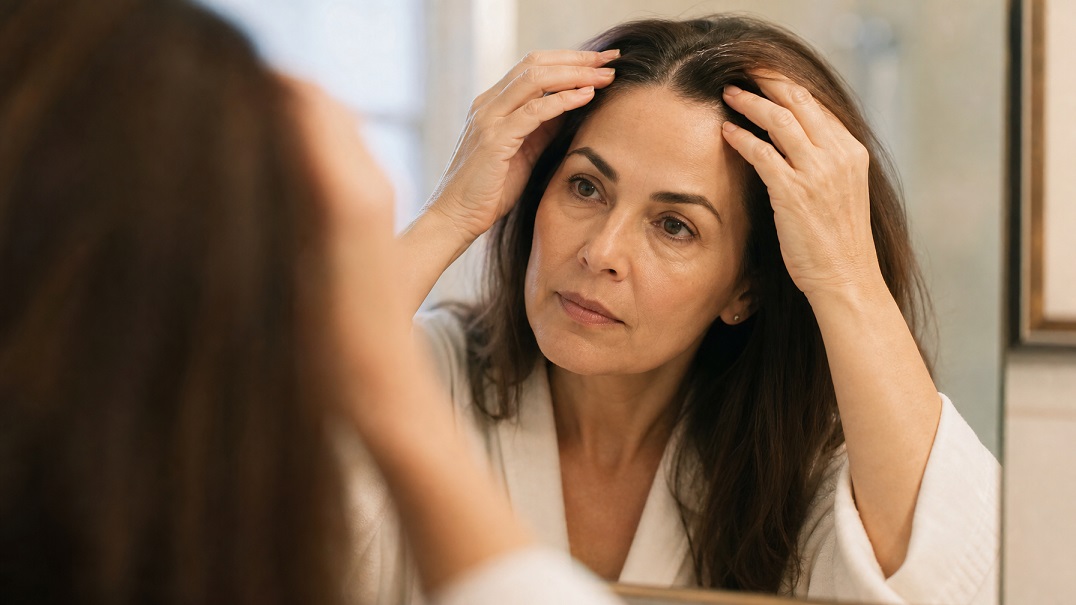
There’s a specific kind of dread that comes with noticing more hair than usual on your pillow, or watching a nail split clean across for the third time this month. It’s rarely dramatic enough to send you straight to a doctor, but it lingers in the back of your mind every time you catch your reflection or reach for a bottle cap.
Most advice on this topic circles the same handful of suspects: biotin, stress, hormones, maybe iron levels. Omega-3 fatty acids rarely make the list, which is a little strange given how directly they’re tied to the structures involved. Hair follicles and nail beds are both built from cells with high turnover and real nutritional demands, and it turns out fat quality matters more here than most people assume.
What Usually Gets Blamed for Hair and Nail Trouble
Before connecting the dots to omega-3, it helps to see the fuller picture of what actually drives thinning hair and weak nails.
Common Culprits: Stress, Hormones, and Aging
Telogen effluvium, a temporary shedding triggered by stress, illness, or major life changes, is one of the most frequent causes of sudden hair thinning. Hormonal shifts from thyroid issues, pregnancy, or menopause are close behind, and aging naturally slows both hair growth cycles and nail regeneration. These explanations are legitimate and often the right place to start.
When the Usual Explanations Don’t Add Up
But plenty of people work through this list, address their stress, get their thyroid checked, and still deal with hair that won’t thicken up or nails that peel at the slightest provocation. In those cases, it’s worth widening the lens to include diet quality, and specifically, the balance of fats being consumed day to day.
How Omega-3 Fatty Acids Support Hair and Nail Structure
Hair follicles and nail matrices are among the most metabolically active tissues in the body, constantly producing new cells, which means they’re also fairly sensitive to nutritional shortfalls.
The Role of DHA and EPA in Follicle Health
Hair follicles rely on a steady supply of nutrients delivered through tiny blood vessels, and cell membrane quality throughout the body, including in the scalp, depends heavily on adequate DHA. Omega-3s also contribute to the oils that keep the scalp itself healthy, and a dry, inflamed scalp environment is a known contributor to weaker, more fragile hair growth.
Omega-3, Inflammation, and the Scalp Environment
EPA’s anti-inflammatory role matters here too. Chronic low-grade inflammation has been associated with several forms of hair thinning, and a diet heavy in omega-6 fats relative to omega-3 tends to promote a more inflammatory internal environment. Correcting that ratio won’t reverse genetic pattern baldness, but it may help create better conditions for the hair and nails you do have to grow in stronger.

What the Research Shows About Omega-3, Hair, and Nails
This is an area where enthusiasm tends to outrun the evidence, so it’s worth being clear-eyed about what studies actually support.
Studies Linking Omega-3 to Hair Growth and Density
Small clinical trials, some using fish oil and others using algae-derived omega-3 combined with antioxidants, have reported reduced hair shedding and improved density after several months of supplementation, particularly in women experiencing diffuse thinning. Nail-specific research is thinner, but omega-3’s documented role in skin barrier function offers a plausible mechanism for nail bed health as well.
What’s Still Unproven
These studies tend to be small, and results vary depending on the population studied and what else was included in the supplement formula. Omega-3 is not a proven treatment for conditions like androgenetic alopecia, and anyone with sudden or significant hair loss should still see a doctor rather than relying on diet changes alone.
Building a Diet That Supports Stronger Hair and Nails
Hair and nail health is rarely about one nutrient in isolation, so the most sensible approach addresses the full picture.
Foods and Nutrients That Work Together
Protein, zinc, biotin, and iron all play established roles alongside omega-3, and a diet that’s lacking in one is often lacking in several. Fatty fish, walnuts, and flaxseed are common omega-3 sources, though the ALA in plant sources converts to usable DHA and EPA at a notoriously low rate.
Considering an Algae-Based Omega-3 Supplement
For people who don’t eat fish regularly, or who want a more concentrated and reliable dose, algae-based omega-3 offers the same DHA and EPA compounds fish accumulate by eating algae in the first place. Pairing it with a generally nutrient-dense diet gives hair and nails the raw materials they need, rather than expecting any single supplement to work in isolation.
Frequently Asked Questions About Omega-3, Hair, and Nails
Here are a few questions that come up often once people start looking at diet as part of the picture.
Can omega-3 deficiency actually cause hair loss?
Severe deficiency can contribute to dry, brittle hair and a compromised scalp environment, though it’s rarely the sole cause of significant hair loss on its own.
How long does it take to see results from omega-3 supplementation?
Hair growth cycles are slow, so most studies show noticeable improvement only after three to six months of consistent intake.
Is fish oil or algae oil better for hair and nail health?
Both provide the same core DHA and EPA compounds, so algae oil works comparably well and is a suitable option for anyone avoiding fish.
Should I take biotin and omega-3 together?
They target different aspects of hair and nail health, so combining them is reasonable, though it’s worth discussing dosages with a healthcare provider.
Are brittle nails always a sign of a nutrient deficiency?
Not always. Frequent water exposure, harsh nail products, and aging can also cause brittleness, so diet is just one factor among several to consider.
Thinning hair and brittle nails rarely trace back to one single cause, but omega-3 status is a piece of the puzzle worth examining, especially if the usual explanations haven’t fully panned out. Between a more balanced diet and, where it fits, a dependable algae-based supplement, it’s a reasonable and low-risk place to start rebuilding some strength from the roots up.


