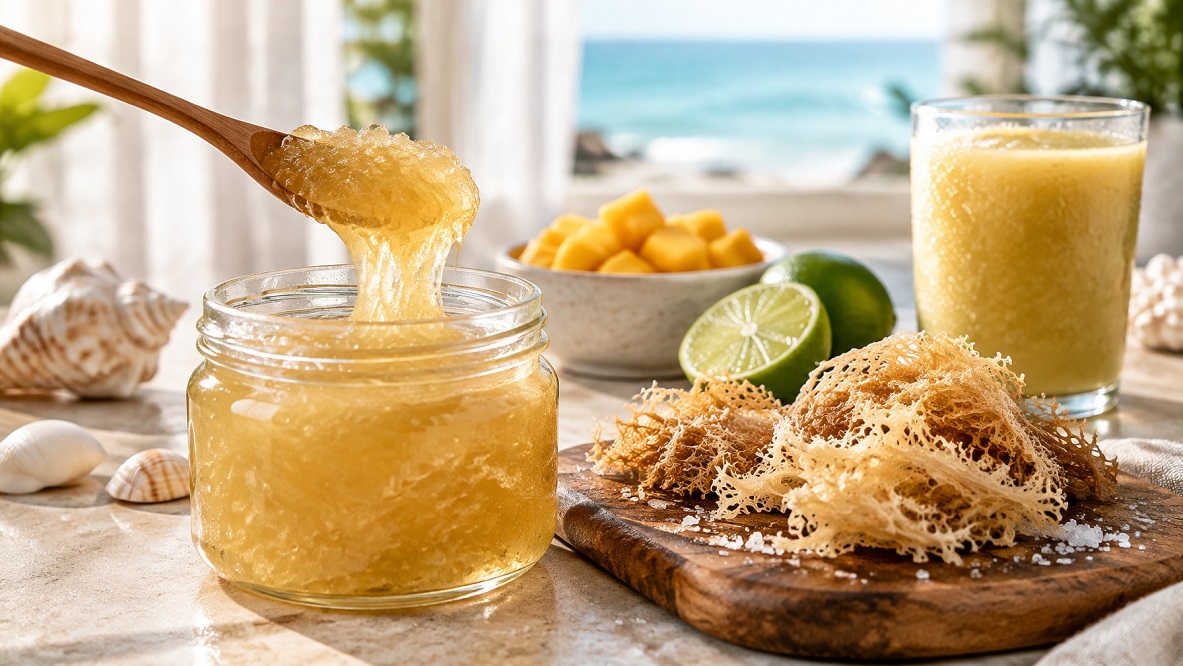
Sea moss does contain a little omega-3, but not much, and it is not a meaningful source of DHA. Irish sea moss is a low-fat seaweed, so even its omega-3 share adds up to very little in a spoonful of gel. If you want DHA, an algae-based supplement is the direct route. One serving of Performance Lab Omega-3 gives you 540 mg of DHA and 270 mg of EPA from algal oil, in vegan softgels.
How Much Fat Does Sea Moss Actually Contain
Sea moss, also called Irish moss (Chondrus crispus), is a red seaweed, and red seaweeds are low in fat. In one analysis of North Atlantic seaweeds, researchers measured about 15 mg of total lipid per gram of dry matter in Chondrus crispus. That works out to roughly 1.5 percent. Omega-3s are only a slice of that small amount.
Sea moss gel is made by soaking the dried seaweed and blending it with water. A spoonful of gel therefore holds only a modest amount of the seaweed itself, and a smaller amount still of its fat. That is the main reason sea moss makes a poor omega-3 plan, even though it is a perfectly good food.
Which Omega-3s Show Up in Sea Moss
Red seaweeds tend to carry EPA, a long-chain omega-3, as one of their main polyunsaturated fats. DHA is much harder to find. In that same survey of nine seaweed species, DHA turned up in just one, a tropical brown seaweed, at about 1 mg per gram of dry matter. The authors called it a unique observation.
A 2026 analysis of dried seaweeds sold in the United Kingdom points the same way. It found DHA consistently lower than EPA, with the highest DHA share at just 0.27 percent of total fatty acids, in dulse. So if DHA is what you are after, sea moss is not going to deliver it.


Sea Moss Marketing Versus the Numbers
Wellness posts often list omega-3s among the benefits of sea moss. That is true in a narrow sense, because it does contain small amounts. But a small amount is not the same as a stated dose, and nothing on a jar of sea moss gel tells you how many milligrams of DHA you are getting.
A good rule: trust the milligram line on a label, not the word “omega-3” in a headline. Our guide to how to read an omega-3 supplement label shows you where to look.
Getting DHA Straight From Algae
Sea moss is algae, so it is fair to ask whether it can supply what fish get from algae. The difference is the species. Some microalgae make DHA in quantity, and algal oil is made from those. Sea moss is a different kind of seaweed with a different fat profile.
Here is what the Performance Lab Omega-3 label shows per serving of three NutriGels: 540 mg of DHA, 270 mg of EPA, and 990 mg of total omega-3, all from algal oil. The softgels are vegan, with no fish ingredients, and the label directs you to take them with your first meal of the day.
You do not have to choose. Keep sea moss in your smoothies for what you enjoy about it, and let an algae oil cover DHA. For more on why algae oil works for plant-based eaters, read vegan omega-3: why algae is the smarter source and our guide to foods highest in omega-3 for vegans.
Frequently Asked Questions About Sea Moss and Omega-3
Does Sea Moss Have DHA?
Not in any meaningful amount. Surveys of seaweeds found DHA is rare, and where it appears it is much lower than EPA.
Is Sea Moss a Good Source of Omega-3?
Sea moss is a low-fat food, so its omega-3 content is small. It is not a reliable way to reach a specific DHA or EPA amount.
How Much DHA Is in Performance Lab Omega-3?
A serving of three NutriGels provides 540 mg of DHA and 270 mg of EPA, with 990 mg of total omega-3.
Can Vegans Get DHA Without Fish?
Yes. Algal oil supplies DHA directly, with no fish involved. The product page describes Performance Lab Omega-3 as vegan.


