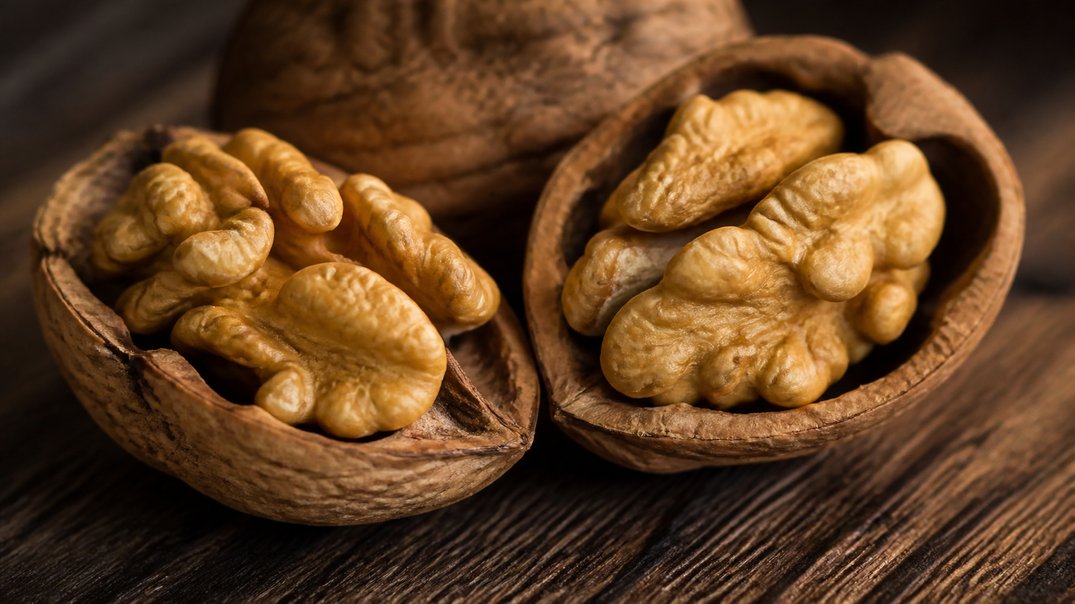
An ounce of walnuts supplies about 2.5 grams of ALA, which more than covers the daily ALA amounts NIH lists. But the body converts very little ALA into DHA, so walnuts cannot match the DHA in algae oil. They offer a different nutrient, and the two foods complement each other rather than compete. Here is what the numbers show and how to use both sensibly.
Walnuts and ALA: What One Ounce Provides
The California Walnut Board and Commission reports that one ounce of walnuts provides 2.5 grams of ALA, citing USDA FoodData Central. An ounce is about one handful, or 12 to 14 walnut halves. Because the figure comes from an industry group, it is worth checking against the USDA database if you need precision.
For context, the NIH Office of Dietary Supplements lists daily ALA amounts of 1.6 grams for men and 1.1 grams for women. One ounce of walnuts exceeds both. NIH also names walnuts among the plant foods that supply ALA.
Why Walnut ALA Cannot Match Algae DHA
The gap comes down to conversion. NIH says the body converts ALA to EPA and DHA only in very small amounts, and that getting EPA and DHA from foods or supplements is the practical way to raise those levels.
What Research Says About Conversion
A 2009 review in Prostaglandins, Leukotrienes and Essential Fatty Acids reports that tracer studies suggest conversion to DHA of about 1 percent in infants and considerably lower in adults. A 2010 cardiovascular review found that ALA supplementation raised blood ALA and EPA but not DHA. The supplement database Examine puts the ceiling for DHA conversion at under 4 percent.
A Rough Calculation
Take the most generous figure. If 4 percent of the 2.5 grams of ALA in an ounce of walnuts became DHA, you would get about 100 mg. The real yield is probably lower, since the 2009 review describes adult conversion as well below the 1 percent seen in infants. At 1 percent, the same ounce would yield only about 25 mg of DHA. By comparison, dsm-firmenich launched an algal oil that provides 545 mg of DHA per gram. This is an illustration using published estimates, not a measurement of any one person.

What Walnuts Still Offer
Walnuts remain a useful food. They supply ALA, an essential fat your body cannot make, and Harvard’s Nutrition Source recommends getting at least one rich source of omega-3s every day, naming walnuts among the options.
The research on ALA itself is more modest than many people assume. The 2010 cardiovascular review cited above reports that fish-derived omega-3s have strong support from randomized trials for heart outcomes, while the benefit of plant-derived ALA is less clear. That does not make walnuts a bad choice. It means they should not be treated as a stand-in for EPA and DHA.
Harvard’s page adds that it is unknown whether ALA has substantial benefits on its own or mainly through partial conversion to EPA and DHA, and Dr. Sacks believes at least part of the benefit comes from that conversion. Either way, walnuts fit comfortably into a varied diet, and a handful a day is an easy habit to keep.
Combining Walnuts and Algae Oil in a Plant-Based Diet
Many people can use both. Walnuts handle the ALA, and an algae oil supplement supplies DHA directly. A small 2013 randomized pilot in the Proceedings of the Nutrition Society found that 600 mg of algal DHA per day raised blood DHA in vegetarians and vegans to levels similar to omnivores, though the authors cautioned that the study was short and that algal and fish oil were not shown to be bioequivalent.
Harvard’s page suggests a 500 mg daily omega-3 supplement for people who do not eat fish, and it notes that experts hold differing views on whether vegans who eat enough ALA need one. Talk with a healthcare provider about what fits your diet. NIH says side effects are usually mild, the FDA recommends no more than 5 grams per day of EPA and DHA combined from supplements, and high doses may cause bleeding problems in people taking anticoagulants.
Frequently Asked Questions About Walnuts and Algae Oil
Short answers to common questions about plant ALA and algae DHA.
How Much ALA Is in a Handful of Walnuts?
About 2.5 grams in a one-ounce serving of 12 to 14 halves, according to the California Walnut Board and Commission citing USDA data.
Can Walnuts Replace Algae Oil?
Not as a DHA source. Conversion from ALA to DHA is very limited, so walnuts and algae oil supply different nutrients.
Do Walnuts Contain DHA?
Walnuts supply ALA, a plant omega-3. NIH lists algal oil and fish oil among the supplements that provide EPA and DHA.
Are Walnuts Safe for Everyone?
No. Walnuts are a tree nut, and the FDA lists tree nuts among the nine major food allergens. People with a tree nut allergy should avoid them and ask an allergist about alternatives.


