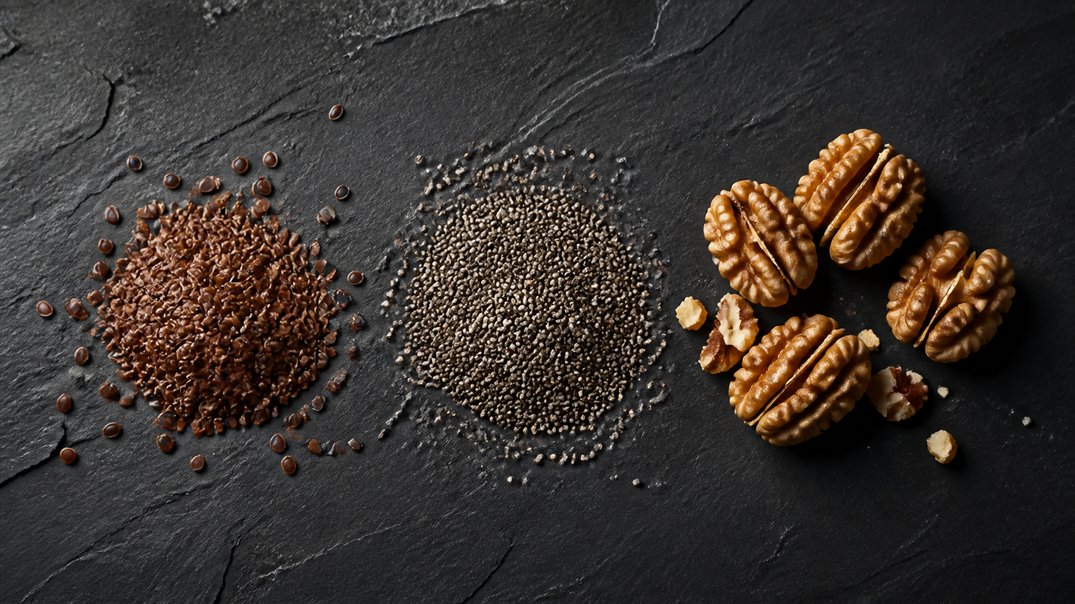
Short answer: Yes and no, depending on which specific omega-3 you’re asking about. Flaxseed and chia seeds genuinely do provide “real” omega-3 in the form of ALA, which is a legitimate essential fatty acid with its own biological importance, and these seeds are some of the most efficient plant sources available for it. Where the picture gets more complicated is that ALA isn’t the same thing as EPA and DHA, the longer-chain omega-3s most research on heart and brain health actually focuses on, and the evidence is fairly clear that eating more flaxseed or chia seeds doesn’t reliably raise EPA and DHA levels the way many people assume it does.
ALA Itself Is Genuinely Real Omega-3
It’s worth being fair to flaxseed and chia seeds from the outset: ALA is not some lesser or fake version of omega-3. It’s one of the three fatty acids central to omega-3 research, and it’s classified as an essential nutrient in its own right, meaning the body cannot produce it and must get it from food. Flaxseed and chia seeds are also excellent sources of it in practical terms. An analysis of dietary omega-3 sources found that flaxseed and chia seeds were among the most efficient food sources for meeting ALA intake recommendations, requiring only about 5 to 7 grams a day to hit typical targets. So if the specific question is whether these seeds provide a legitimate, essential omega-3 fatty acid, the answer is a clear and confident yes.
Where the Picture Changes: EPA and Especially DHA
The complication shows up once you ask whether that ALA reliably becomes EPA and DHA once it’s in the body, and here the research paints a considerably more mixed picture. A study specifically testing this in postmenopausal women had participants consume milled chia seeds daily for seven weeks and found that blood levels of ALA rose by 138 percent and EPA rose by 30 percent, but no significant change occurred in DHA levels over the course of the study. This is a genuinely useful, concrete finding: chia seeds did move the needle on ALA and even EPA to some degree, but DHA, arguably the omega-3 most closely tied to brain and eye health research, simply didn’t budge.
This pattern isn’t unique to that one study either. A broader scoping review examining multiple plant-based omega-3 supplementation trials found that high-dose flaxseed or echium seed oil supplementation provided no meaningful increase to omega-3 index levels in the studies reviewed, and some studies even showed reductions, a notably different outcome from the same review’s findings on algal oil, which increased omega-3 index levels consistently across every study included. When multiple independent studies point in the same direction, it’s a reasonably strong signal rather than a coincidence.
Testing Is the Most Honest Way to Know Where You Stand
Because individual conversion ability genuinely varies from person to person, based on factors like sex, genetics, and overall diet, the most reliable way to know whether your own ALA intake from foods like flaxseed or chia is actually translating into adequate EPA and DHA levels is to check directly rather than assume. A lab that specializes in this kind of testing notes that measuring the Omega-3 Index directly, through a blood test assessing the percentage of EPA and DHA in red blood cells, is one way to determine whether ALA intake from foods like chia seeds is actually reaching the target range, since relying on ALA intake alone as a proxy can be genuinely misleading given how variable the conversion process is between individuals.
The Fair, Complete Answer
So do flaxseed and chia seeds provide real omega-3? Absolutely, in the form of ALA, and there’s no reason to be dismissive of that; ALA has its own essential biological role and these seeds are genuinely excellent, efficient sources of it. But if someone is eating flaxseed or chia specifically because they believe it’s an adequate substitute for a direct source of EPA and DHA, the research doesn’t really support that assumption. These are two different, if related, nutritional goals, and conflating them is where the confusion tends to creep in.
- Flaxseed and chia seeds are excellent, legitimate sources of ALA. This is a real and essential omega-3 fatty acid, not a lesser substitute.
- These seeds are not a reliable way to raise DHA levels specifically. Multiple studies have found little to no DHA increase from ALA-rich seed supplementation, even over multi-week periods.
- If EPA and DHA status specifically is your goal, a direct source is the more dependable route. Testing your Omega-3 Index is a concrete way to find out where you actually stand rather than assuming.
The most useful way to think about it may be this: flaxseed and chia seeds are worth including in a diet for the real nutritional value of ALA itself, but they’re answering a different question than “how do I raise my EPA and DHA levels,” and it’s worth keeping those two goals separate rather than treating one as an automatic solution to the other.


