Short answer: It depends heavily on which omega-3 you mean. Most people in the U.S. comfortably meet the recommended intake for ALA, the plant-based omega-3, through ordinary eating patterns. But EPA and DHA, the long-chain forms most closely linked to omega-3’s better-known benefits, are a different story: national survey data consistently shows that the large majority of adults fall well short of even modest targets for these two, largely because they’re concentrated in a food most people don’t eat very often, namely fish.
The ALA Picture: Mostly Fine
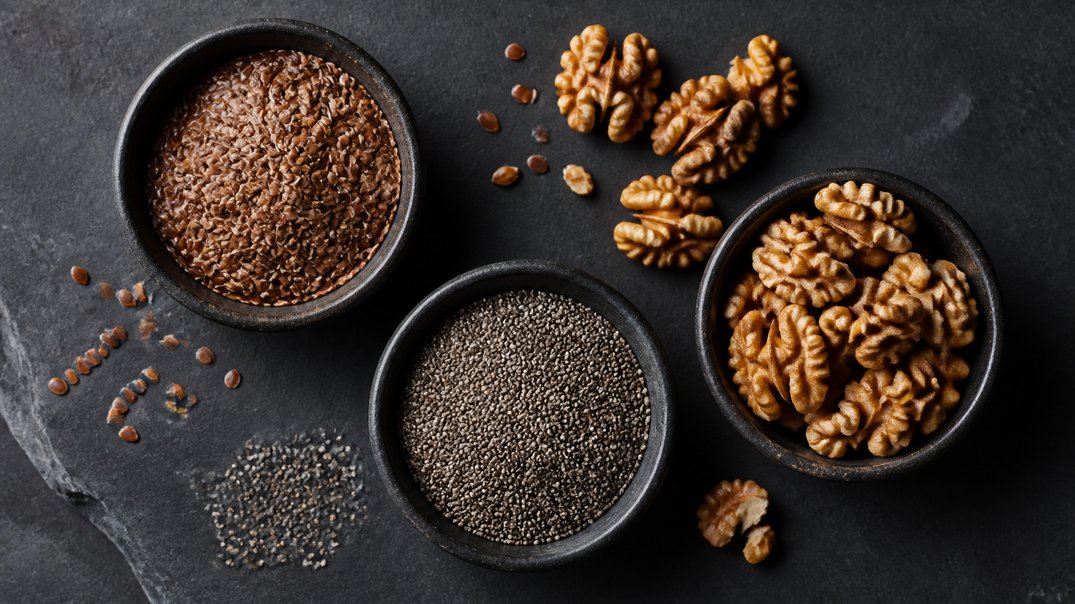
ALA is fairly easy to get from a typical diet because it’s present in a range of common plant oils and foods, including soybean oil, canola oil, walnuts, and flaxseed. Survey data bears this out: according to National Health and Nutrition Examination Survey data, average daily ALA intake from food alone is about 1.59 grams for adult women and 2.06 grams for adult men, both of which sit above the official Adequate Intake levels of 1.1 and 1.6 grams, respectively. So for the one omega-3 with a formal U.S. recommendation, food alone genuinely does the job for most people, without any special effort or supplementation required.
The EPA and DHA Picture: Not So Much
The story changes considerably once you look at EPA and DHA specifically. These long-chain forms are concentrated almost entirely in fatty fish, and most people simply don’t eat enough of it. An analysis of national survey data covering U.S. adults found that average daily intake of EPA and DHA combined from food alone was only about 86 milligrams, far below the roughly 250-milligram target that many expert bodies recommend. Broken down further, the same data found average EPA intake of about 23 milligrams a day and DHA intake of about 63 milligrams a day.
The gap is even starker in some subgroups. A separate analysis focused on women of childbearing age found that over 95 percent of women in that age group did not meet a daily target of 250 milligrams combined EPA and DHA, even counting intake from both food and supplements together. This isn’t a fringe finding; it lines up with a broader pattern seen across multiple analyses of the same national data, which consistently find that the overwhelming majority of the U.S. population falls short of common EPA and DHA targets.
Why This Happens: It’s Really a Fish Problem
The underlying reason is straightforward once you look at where EPA and DHA actually come from in a typical diet. The same national survey data found that average total fish consumption among adults was well below the American Heart Association’s recommendation of at least two 3.5-ounce servings per week. Unlike ALA, which shows up in oils used routinely in cooking and baking, EPA and DHA are concentrated in a specific, less commonly eaten food category. Someone can eat a perfectly balanced, health-conscious diet by most standards and still land well short of the 250-milligram EPA-and-DHA target simply because fish isn’t a regular part of their week.
Relying on ALA-to-EPA/DHA conversion doesn’t close this gap either. That conversion process happens in the liver but is inefficient, with research generally putting the conversion rate at under 15 percent, which means eating more flaxseed oil or walnuts isn’t a realistic substitute for eating fish or taking a supplement if the goal is specifically to raise EPA and DHA levels.
What About People Who Don’t Eat Fish?
For vegetarians, vegans, or anyone who simply doesn’t eat fish, food-based EPA and DHA sources are genuinely limited; there’s no plant-based whole food that provides meaningful amounts of either. The main non-fish food source is algae itself, since fish only acquire EPA and DHA by eating algae or smaller fish further down the food chain. Algae-based foods aren’t a significant part of most diets, though, which is why algal oil supplements exist as a direct route to these fatty acids without going through fish at all. Notably, research comparing the two found that DHA from algal oil capsules was found to be nutritionally equivalent, in terms of how well the body absorbs and uses it, to DHA from cooked salmon in a small comparative study, meaning it’s a genuine substitute rather than an inferior workaround.
- Food alone likely covers your ALA needs already. Common cooking oils, nuts, and seeds make this the one omega-3 target most people hit without trying.
- Food alone probably doesn’t cover EPA and DHA unless you eat fish regularly. Aim for roughly two servings of fatty fish per week if that’s your main strategy, since occasional fish consumption tends not to close the gap.
- Don’t count on flaxseed or walnuts to substitute for fish. The ALA-to-EPA/DHA conversion rate is too low to meaningfully raise long-chain omega-3 levels on its own.
- If fish isn’t part of your routine, algal oil is a legitimate, evidence-supported alternative, not just a fallback option, since it delivers the same molecules in a form the body uses comparably well.
The honest answer, then, is that “eating well” in a general sense doesn’t automatically mean getting enough omega-3, at least not the long-chain forms most people are actually trying to get more of. Whether food alone gets you there comes down almost entirely to how often fish, or a fish alternative, shows up on your plate.


